News

Way2net » News

2026 Report: Digital Marketing in Argentine SMEs

¿Cuánto invierten las PyMEs argentinas en marketing digital?

How much do Argentine SMEs invest in digital marketing? Which channels do they use? What results are they achieving? And how are they incorporating artificial intelligence into their marketing strategies?

By Cesar Fernandez | Director, Way2net Digital Marketing Agency | August 2026

Key Digital Marketing Data from Argentine SMEs in 2026

IndicatorResult
Companies surveyed187
Average monthly investmentUSD 1,847
Median monthly investmentUSD 780
Use Meta Ads73%
Use Google Ads61%
Use SEO44%
Do not clearly measure ROI46%
Use generative AI64%
Plan to increase SEO investment42%
Plan to increase GEO investment22%

When you ask an SME how much it spends on digital marketing, the first response is often silence. Then comes a number that usually underestimates the real investment, because nobody adds up the email platform, design tools, community manager hours, and the Meta campaign that has been running for three months without being reviewed.

This disconnect between what companies think they invest and what they actually spend was the starting point for this study.

At Way2net, we have been working with Argentine SMEs for more than 15 years, and one of the most common conversations during initial meetings with new clients is precisely this: “I don’t really know how much we’re spending on marketing, and I’m not sure whether it’s working.”

Between February and July 2026, we surveyed 187 SMEs from different industries and company sizes to understand how much they actually invest in digital marketing, which channels receive most of their budget, what results they perceive, and what their main obstacles are.

¿Cuánto invierten las PyMEs argentinas en marketing digital?

The results confirm some common assumptions while challenging others.

7 Key Findings from the Study

  1. The median monthly digital marketing investment among surveyed SMEs is USD 780.
  2. Meta Ads is the most widely adopted channel.
  3. Google Ads remains essential for capturing existing demand.
  4. SEO has lower adoption but a stronger perception of long-term ROI.
  5. Almost half of companies do not properly measure their return on investment.
  6. Generative AI is already being incorporated into marketing teams.
  7. GEO is beginning to emerge as a new area of investment.

Methodology

The research was conducted through semi-structured interviews and an online questionnaire distributed among Way2net’s active and former clients, as well as through a network of business contacts.

The resulting sample is not representative of the entire Argentine SME sector. It is biased toward companies that already have some level of digital presence and have generally already decided to invest in digital channels.

This is important when interpreting the figures: companies that have not yet invested anything in digital marketing are not represented in the sample.

Sixty-three percent of participants are located in the Buenos Aires metropolitan area. The remainder are distributed across Córdoba (11%), Rosario (8%), and other provinces.

In terms of company size, 48% have between 5 and 25 employees, 34% between 26 and 100, and the remaining 18% have more than 100 employees, although this last group is at the upper limit of what is commonly considered an SME.

The most represented industries were professional services (22%), technology and software (18%), retail and commerce (16%), hospitality and gastronomy (13%), healthcare (11%), and education (9%).

How Much Do Argentine SMEs Invest?

The average monthly digital marketing investment among the surveyed SMEs is USD 1,847.

However, this number only makes sense when looking at the distribution, because the average is influenced by a relatively small group of companies with significantly larger budgets.

The median is USD 780, which provides a more representative picture of what the “middle” company in the sample invests.

The complete distribution reveals four distinct investment groups:

  • Minimal investment — less than USD 800/month: 19% of respondents. This generally corresponds to very small companies or businesses with an early-stage digital presence. Spending is concentrated on a single platform, usually Meta.
  • Basic investment — USD 800 to USD 2,000/month: 31%. This is the largest segment. These companies typically run Meta or Google Ads campaigns but have little or no investment in SEO, GEO, or an integrated marketing strategy.
  • Medium investment — USD 2,000 to USD 3,500/month: 28%. Multichannel activity starts to become more common, combining paid advertising with SEO or social media management.
  • High investment — more than USD 3,500/month: 22%. These companies generally operate in highly competitive industries or have larger teams. They either work with an agency or have at least one internal marketing professional.

One particularly interesting finding is that 10% of respondents invest more than USD 5,000 per month in digital marketing.

These are not necessarily large corporations. They include SMEs operating in highly competitive industries such as fintech, B2B software, construction materials, and premium tourism, where the value of a new customer can justify a significant investment or where digital has become one of their main sources of new business.

“We started by spending USD 400 a month on Meta and thought that was a lot. When we calculated what a new customer was worth, we realized that ten new customers a month would pay for that investment within the first week.”

— Sales Manager, SaaS company, Buenos Aires

Which Digital Marketing Channels Are Argentine SMEs Using?

The most widely adopted channel is Meta Ads (Facebook and Instagram), used by 73% of respondents.

It is followed by Google Ads at 61%.

Organic SEO ranks third, with 44% adoption, while email marketing —which was significantly more relevant five years ago— ranks fourth at 29%.

The adoption of GEO strategies, focused on improving visibility in AI-powered search and answer engines, is still at an early stage.

Among companies using multiple channels, the average budget distribution is:

  • Google Ads: 36%
  • Meta Ads: 31%
  • SEO and content: 19%
  • Web design and development: 8%
  • Email marketing and automation: 6%

What stands out is not necessarily which channel receives the largest budget, but the gap between investment and perceived return.

In open-ended responses, SEO was frequently identified as the channel with the best long-term ROI among companies that work on it consistently —yet it remains the third most widely adopted channel.

The most common explanation was simple:

“It takes time to see results, and we don’t have the patience for it.”

Google Ads can generate results quickly, but customer acquisition costs tend to increase over time. Companies that have been running Ads for more than 18 months without investing in SEO show, on average, a 40% higher cost per lead (CPL) than companies combining both channels.

The Specific Case of Meta Ads

Meta remains the entry point for most Argentine SMEs for two very practical reasons: the barrier to entry is low, and interest-based targeting makes it possible to reach reasonably relevant audiences without a complex technical infrastructure.

However, 54% of companies using Meta acknowledge that they have not properly configured their tracking pixel or do not have reliable conversion data.

They are investing —sometimes several thousand dollars per month— without knowing whether sales are actually coming from that investment or from another source.

This is one of the most common structural problems among SMEs: platforms make it extremely easy to start advertising, but that simplicity can lead companies to overlook basic measurement and tracking.

Without reliable conversion data, optimization is essentially done blind.

Differences by Industry: Not All Businesses Are the Same

Technology and software, together with construction materials, lead in average investment at USD 2,340 per month and in SEO adoption at 68%.

This makes sense: these companies tend to understand the channel, their customers actively search for their solutions on Google, and the value of a contract justifies sustained investment in organic visibility.

Professional services —including accounting firms, law firms, and consultancies— show the strongest year-over-year growth, with average budgets up 47% compared with 2025.

The explanation is straightforward: after the pandemic, these professionals increasingly understood the importance of online reputation, while competition on Google became more intense.

At the opposite end, gastronomy has the lowest average budget at USD 420 per month and the highest concentration in a single channel, Meta.

This does not necessarily mean that the investment is inefficient. In gastronomy, Instagram continues to have a major influence on the decision to visit a restaurant or venue. Rather, the business model leaves less room to experiment with multiple channels.

An interesting finding is that retail has the highest adoption of Meta Ads at 83%, but also some of the lowest satisfaction levels with results.

Competition for consumer products on Meta is intense, CPMs increased significantly during 2025–2026, and the algorithm increasingly favors accounts with large volumes of conversion data —which are generally the larger companies.

The ROI Problem: Who Measures It and Who Doesn’t?

Forty-six percent of respondents acknowledge that they do not have clear metrics for measuring their digital marketing ROI.

This does not necessarily mean their results are poor. In many cases, the business is growing, but attribution is not properly configured to determine how much of that growth comes from digital channels.

Among companies that do measure ROI, the reported averages are:

  • Google Ads (SEM): 2.9x during the first year
  • Organic SEO: 1.6x during the first year and 4.2x by the third year
  • Meta Ads: 2.1x, with significant variation between companies

The difference between SEO’s first and third year is particularly relevant.

The channel tends to generate a lower return during the first year and a substantially higher return over time because the content and authority built through SEO can continue generating traffic without requiring an equivalent increase in media spend.

However, this data should also be interpreted carefully.

Companies that measure ROI correctly tend to have a higher level of digital maturity. Therefore, the figures may be subject to selection bias: companies that measure their results may be more likely to do so because they are already achieving positive outcomes.

Inflation and the Exchange Rate: Permanent Distortions

Sixty-seven percent of respondents identify exchange-rate volatility as the main obstacle to planning digital marketing investment.

This is not a minor issue.

Advertising platforms charge in US dollars, while many Argentine businesses generate revenue in Argentine pesos. When the exchange rate changes, a budget that covered USD 1,000 the previous month may no longer provide the same level of investment.

This creates a very Argentine behavior: 38% of surveyed SMEs adjust their marketing budget every month depending on exchange-rate conditions, rather than maintaining a stable investment.

The problem is that advertising platforms need consistency to optimize.

An account that constantly increases and decreases its budget may never complete the learning phase and therefore may never reach its full potential.

Companies that manage this constraint more effectively tend to be those that have dollarized their pricing or operate in businesses where revenue is linked to the dollar, such as real estate, or those that rely more heavily on channels that do not require continuous media spending, such as organic SEO.

“We decided to keep our Google Ads investment stable in dollars, even if that sometimes means adjusting other areas. The alternative —constantly increasing and decreasing the budget— is worse. We lose the position we have built and then it becomes more expensive to recover it.”

— Marketing Manager, financial services company, Buenos Aires

What Do the Best-Performing SMEs Do Differently?

Among companies investing more than USD 2,000 per month and reporting satisfactory results, several consistent patterns emerge.

They measure from the beginning

Before launching campaigns, they have conversion tracking configured.

They do not start advertising and only later try to understand what worked.

Meta’s tracking pixel, Google Ads tags, and Google Analytics 4 are properly connected from day one.

They combine paid media with SEO

Seventy-nine percent of this group works simultaneously with paid advertising and SEO, compared with 31% of the rest of the sample.

They do not necessarily do this because of theoretical sophistication. Rather, they have learned from experience that when paid campaigns stop —because of budget constraints, account suspensions, or other issues— organic traffic can continue generating opportunities.

They work with stable providers

Only 12% of this group changed agencies or freelancers during the previous 12 months, compared with 34% among lower-investment companies.

Constantly changing providers means repeatedly starting from zero in terms of business knowledge.

Digital marketing requires accumulated learning to improve performance over time.

They have an internal person responsible for the channel

This does not necessarily mean having a full marketing team.

However, there is usually someone inside the company who reviews reports, has access to the accounts, and acts as the main point of contact with the agency.

Companies where “the agency handles all the marketing and nobody internally supervises it” are more vulnerable to inefficient investment.

They plan by quarters, not months

Instead of deciding the marketing budget month by month based on immediate business performance, these companies plan quarterly and maintain their investment even when a particular month is weaker.

They understand that digital marketing works through accumulated learning and optimization: weaker months are part of the process and are not necessarily evidence that a channel does not work.

¿Cuánto invierten las PyMEs argentinas en marketing digital en 2026?

The Most Common Mistakes Among SMEs That Invest but Don’t See Results

Beyond measurement problems, several recurring mistakes emerged among companies reporting weaker results.

Investing in paid advertising without fixing the website

Forty-one percent of companies spending more than USD 500 per month on Google Ads have websites that do not pass Google’s Core Web Vitals.

In other words, they have issues related to mobile loading speed, interactivity, or visual stability.

Sending paid traffic to a slow website is like filling a bucket with holes.

Not having dedicated landing pages

Fifty-seven percent of companies running Ads send traffic to their homepage instead of a conversion-focused landing page.

A homepage is designed to provide general context about a company. It is not necessarily designed to convert a specific search intent into a lead or sale.

Using Meta to sell directly when the product requires education

Some products and services require potential customers to understand why they need them before considering a purchase.

Meta can be effective for generating awareness and capturing demand, but it is not always the best channel for latent demand that needs to be educated.

In these cases, content SEO and Google Search Ads can often be more appropriate.

Not investing in creative assets

Meta campaigns depend heavily on the quality of graphic and video content.

Forty-eight percent of respondents acknowledge using generic creatives or failing to refresh them for more than three months.

The algorithm rewards novelty: when the same creative stops generating engagement, audience response declines and CPMs can increase.

Sixty-one percent of respondents plan to maintain or increase their digital marketing budget during the second half of 2026.

Twenty-four percent plan to maintain their current budget, while only 15% expect to reduce it.

The channels expected to see the strongest growth are:

  • SEO: 42% plan to increase investment.
  • Short-form video for social media: 38%.
  • GEO —optimization for AI-powered search and answer engines such as ChatGPT and Google AI Overviews: 22%.

The last figure is particularly significant because, only 12 months ago, very few Argentine SMEs were familiar with the concept of GEO.

Artificial intelligence is changing not only how people search for information, but also how companies create content.

Sixty-four percent of respondents already use some form of generative AI to produce marketing content.

However, AI usage does not automatically translate into better content.

Mass-produced AI content without editorial review can have the opposite effect, creating generic, low-value material that fails to demonstrate expertise or satisfy users’ needs.

Conclusions and Recommendations

The findings of this study point to several clear conclusions for Argentine SMEs looking to invest more effectively in digital marketing.

The median investment is around USD 780 per month, but this number only makes sense when accompanied by proper measurement. Without conversion tracking, any investment is effectively spending with an unknown return.

SEO remains one of the channels with the strongest long-term economics, but it requires consistency and time. SMEs that started investing in SEO two or three years ago are now seeing results that companies postponing the channel cannot reproduce overnight.

Inflation and exchange-rate volatility are genuine obstacles, but companies that manage them best tend to be those that planned their investment in dollar terms from the beginning and maintained consistency despite economic uncertainty.

And the most widespread problem is not necessarily budget.

It is the lack of measurement.

A smaller budget that is properly measured and optimized can outperform a larger budget managed without reliable data.

If you want to evaluate how your company compares with these benchmarks, we can provide a free digital marketing assessment.

Frequently Asked Questions About Digital Marketing Investment for SMEs

How much should an Argentine SME invest in digital marketing?

There is no universal budget. In Way2net’s study of 187 Argentine SMEs, the median monthly digital marketing investment was USD 780, while the average reached USD 1,847.
The appropriate budget depends on the industry, competitive environment, sales cycle, customer value, and business objectives.
For paid advertising and SEO, the key is to have enough budget to sustain the strategy and measure its results.

Which digital marketing channel works best for SMEs?

It depends on the industry, sales cycle, and whether the product already has existing demand or needs to be created.
If customers actively search for what you sell, Google Ads and SEO can be a particularly effective combination.
If the product needs to be visually demonstrated or the audience does not yet know they need it, Meta Ads can work well as an awareness and demand-generation channel.
For most businesses, however, a combination of channels is more effective than relying on a single platform.

How long does it take to see an ROI from digital marketing?

The timeline varies depending on the website’s starting point, competition, search demand, and type of strategy.
Paid campaigns can generate data and conversions relatively quickly, while SEO generally requires sustained investment to build authority and organic visibility.
Google Ads and Meta Ads can begin generating results during the first month, although meaningful optimization generally takes between 60 and 90 days.
This is why a combination of paid media and SEO can be particularly effective: paid advertising generates faster results while organic visibility develops over time.

Should an SME hire a digital marketing agency or manage everything in-house?

t depends on the company’s workload, campaign complexity, budget, and internal capabilities.
An agency provides access to specialized professionals without requiring the company to hire every role individually. An internal team may make more sense once there is enough volume, budget, and operational complexity to justify a dedicated marketing department.
For many SMEs, working with an agency can be more efficient until the volume of work justifies building a full internal team.

How can I tell whether my digital marketing agency is doing a good job?

The basic KPIs to review every month include:
– Cost per lead or cost per sale.
– Traffic conversion rate.
– Google rankings for strategic keywords.
– Organic traffic as a percentage of total traffic.
– Leads and sales generated by each channel.

If your agency does not clearly report these metrics in context —rather than simply providing screenshots from Analytics— that should be a warning sign.

How much do Argentine SMEs invest in digital marketing?

According to Way2net’s 2026 study of 187 Argentine SMEs, the median monthly digital marketing investment was USD 780, while the average reached USD 1,847.

Which digital marketing channels are most widely used by Argentine SMEs?

In Way2net’s sample, Meta Ads was used by 73% of companies, Google Ads by 61%, and SEO by 44%.

How many SMEs use artificial intelligence in marketing?

Sixty-four percent of the companies surveyed reported using generative artificial intelligence tools for marketing-related activities.

About the Author

Cesar Fernandez is the founder and director of Way2net, a digital marketing agency with more than 15 years of experience operating in Argentina, the United States, and Latin America.

He has managed more than USD 95 million in digital advertising investment and has worked with companies across industries including software, fintech, retail, healthcare, construction, and tourism.

He writes about digital strategy, SEO, AI visibility, and marketing trends in Argentina and Latin America.O y tendencias del mercado argentino.

How to create a successful email marketing campaign: 2026 complete guide

campaña de email marketing -  guia completa 2026

Email marketing has an average ROI of $42 for every dollar invested. No other digital channel comes close. And yet, most of the email campaigns that land in your inbox don’t deserve that click.

Why? Because sending emails isn’t the same as email marketing. The difference lies in the strategy, segmentation, and execution. This guide, created by our digital agency, covers all of that, from the ground up and with sound judgment.

What is an email marketing campaign?

An email marketing campaign is the coordinated sending of one or more emails to a contact list with a specific objective: generating sales, nurturing leads, building customer loyalty, announcing a product launch, or reactivating inactive users.

Unlike transactional emails (purchase confirmations, password recovery requests), a marketing campaign has a persuasive intent and follows a strategic logic: who you send it to, what you say, when, how often, and what you want them to do after reading.

The term “mailing campaign” is used interchangeably, although in Argentina, “mailing” specifically refers to mass mailings via a specialized platform (Mailchimp, Brevo, emBlue, etc.), as opposed to one-to-one emails.

campaña de email marketing en argentina

Why email marketing will remain the channel with the best ROI in 2026?

Before diving into the how, it’s worth understanding the why. These are the numbers that justify the investment:

  • $42 return on every $1 invested on average globally (DemandSage, 2026)
  • 42.35% average global open rate for campaigns analyzed in 2025 (GenesysGrowth)
  • 4.6 billion email users worldwide—more than any social network
  • Emails with personalized subject lines are 26% more likely to be opened
  • Implementing AI in email marketing generates 13% more clicks and 41% more revenue through personalization

Email doesn’t compete with social media. It’s the only channel where the mensaje llega directo a una bandeja que el usuario controla, sin algoritmos que decidan si tu contenido se muestra o no.


Step 1: Define the objective of your email campaign

Every campaign starts with a question: Why am I doing this?

The most common objectives are:

  • Lead generation: convert visitors into subscribers with a lead magnet or form
  • Nurturing: guide a prospect through the funnel until they are ready to buy
  • Direct conversion: send an offer or promotion with a CTA to a product/service
  • Retention and loyalty: valuable content for active customers (newsletters, updates, success stories)
  • Reactivation: re-engage contacts who haven’t interacted in months
  • Launch: announce a new product, service, or feature

The most frequent mistake: mixing several objectives in the same email. One email, one objective, one CTA. If you want to say three different things, send three separate campaignsntas.


Step 2: Build and Segment Your Contact List

Your list is the most valuable asset in any email marketing strategy. A database of 5,000 well-segmented contacts is worth more than 50,000 imported from dubious sources.

How to Build a Quality List

  • Subscription forms on your website, blog, and landing pages
  • Lead magnets: downloadable guides, templates, calculators, webinars
  • Pop-ups with a value proposition (non-intrusive, with perfect timing)
  • CRM integrations to capture leads from other channels

What not to do: buy lists. They destroy your domain’s reputation, violate regulations like GDPR and CAN-SPAM, and have near-zero conversion rates.

Segmentation: The True Engine of Email Marketing

Segmenting means dividing your list into groups based on relevant criteria to personalize your message. By 2026, segmenting by “large company” or “tech industry” will no longer suffice.

The signals that truly work are:

  • Browsing behavior: which pages they visited, which products they viewed, how many times they returned
  • Email interaction history: opened the last 3, never clicked, downloaded a resource
  • Funnel stage: cold lead, qualified lead, opportunity, active customer
  • Purchase data: frequency, average order value, last purchase date
  • Stated preferences: what the user selected on the subscription form

The best platforms allow you to create dynamic segments that automatically update when a contact’s behavior changes. If someone who was inactive starts opening your emails, the system moves them to the correct segment without any user intervention.anual.


Step 3: Choose the right email marketing platform

Not all platforms are created equal. The most used in the Spanish-speaking market in 2026:

PlatformBest forCharacteristics
MailchimpSMBE & ecommerceIntuitive interface, free plan up to 500 contacts
Brevo (ex-Sendinblue)Advanced automationPrice per email sent, not per contact
emBlueLATAM companiesLocal support, integrated SMS
HubSpotInbound marketingNative CRM integration
KlaviyoEcommercePredictive segmentation and automation by purchasing behavior
ActiveCampaignAgencies & B2BCRM + automation on a single platform

The selection criterion is not which one has more features: it’s which one integrates with your current stack, has support in Spanish if you need it, and scales with your shipping volume without skyrocketing costs.


Step 4: Design an Email That Gets Read

Structure of a High-Performing Email

  • Subject line: The most important thing. If it doesn’t open, nothing else matters.
  • Preheader: The text that appears in the inbox next to the subject line. Most people ignore it. It’s free space.
  • Header: Logo or header image. Keep it brief.
  • Body: The message. Clear hierarchy, short paragraphs, one idea per section.
  • CTA (Call to Action): Button with a specific action. Only one CTA per email.
  • Footer: Sender’s name, physical address, unsubscribe link.

Design Principles That Improve Click-Through Rate

  • Mobile-first: More than 60% of emails are opened on mobile devices. If it doesn’t look good on a small screen, you’ve lost.
  • Balanced text-to-image ratio: Spam filters penalize emails that are almost entirely images.
  • Maximum width of 600px for the main block.
  • CTA buttons at least 44px high for easy touch on touchscreens.
  • Legible typography: minimum 14px for body text, 22px for headings.
  • White or neutral background: minimalist design converts better than cluttered designs.

Email marketing copywriting

The subject line determines whether the email is opened. The first paragraph determines whether it’s read. The CTA determines whether it converts.

For the subject line:

  • Use the recipient’s name when it feels natural, not forced.
  • Generate curiosity without clickbait: “What we learned after 200 email campaigns”
  • Try concrete numbers: “3 mistakes that kill your open rate”
  • Avoid words that trigger spam filters: “FREE,” “URGENT,” “$$$$,” all in uppercase
  • Optimal length: between 30 and 50 characters (fully visible on mobile)

For the body:

  • Start with what matters to the reader, not what matters to your company
  • One idea per paragraph, paragraphs no longer than 3 lines
  • Active voice: “we sent you” instead of “it has been sent”
  • CTA with an action verb + a concrete benefit: “Download the free guide,” “Check availability”

Step 5: Ensure Deliverability Before Sending

A flawless email is useless if it ends up in spam. Deliverability in an email campaign is the set of technical and reputational factors that determine whether your email reaches the inbox.

Domain Authentication: SPF, DKIM, and DMARC

These three protocols are the minimum requirements by 2026. Google and Yahoo already require them for bulk senders, and Outlook has extended them to all volumes.

SPF (Sender Policy Framework): Indicates which servers are authorized to send on behalf of your domain.

DKIM (DomainKeys Identified Mail): A digital signature that verifies that the email content has not been altered in transit.

DMARC: A policy that tells receiving servers what to do with emails that fail SPF or DKIM (monitor, quarantine, or reject).

If you don’t have all three configured, your campaigns will have a significantly worse deliverability rate, even if the content is impeccable.

Other deliverability factors

Domain and IP reputation: This is built by sending to engaged contacts (those who open and click) and destroyed by sending to old lists with a high bounce rate.

Bounce rate: Keep it below 2%. Clean your list regularly with email validation tools.

Spam rate: Keep it below 0.1%. If you exceed 0.3%, major providers will start blocking your domain.

Sending history: Don’t jump from 100 to 100,000 sends overnight. Domain warming is gradual.

Visible unsubscribe link: This is legally required and also reputationally important. Users who can’t unsubscribe with one click will mark it as spam.


campaña de mailing

Step 6: Automate the highest-converting flows

Automation doesn’t replace strategy: it replaces scale. A well-designed flow works without human intervention, sending the right message to the right person at the right time.

Automation flows every company should have:

  1. Welcome series: A sequence of 3 to 5 emails sent when someone subscribes. It has the highest open rate of any campaign (68.6% on average). This is the moment of peak attention: take advantage of it to introduce the company, deliver quick value, and guide the subscriber toward the next step.
  2. Lead nurturing: A sequence of educational content that accompanies the prospect while they research. The goal isn’t to sell in every email: it’s to be helpful until the lead is ready to talk to sales.
  3. Abandoned cart recovery (ecommerce): A sequence of 2 to 3 emails for users who added products to their cart but didn’t complete the purchase. Very high ROI because the purchase intent was already present. The first email should be sent within the first hour.
  4. Reactivating Inactive Contacts: For contacts who haven’t opened any emails in 90+ days, try a subject line that breaks the pattern (“Are you still there?”), offer something concrete, and if they don’t respond after 2 or 3 attempts, unsubscribe them. A small, active list is better than a large, inactive one.
  5. Post-Purchase and Loyalty: Onboarding emails for new customers, review requests, upsells or cross-sells, and referral programs. A customer who has already purchased is the cheapest lead there is.

Dynamic Flow Logic in 2026

Linear flows (Email 1 – wait 3 days – Email 2 – wait 5 days – Email 3) are the model of the past. Modern platforms allow conditional branches:

If they opened Email 1, send Email 2 with advanced content.

If they didn’t open Email 1… Send email 1B with a different subject line.

If they clicked the CTA, move them to the “ready to buy” segment.

If they downloaded the resource, wait 48 hours and send a related success story.

This level of behavioral personalization is what separates an average campaign from one that truly converts.


Step 7: Run A/B Tests Before Scaling

A/B testing involves sending two versions of an email to a portion of your list, measuring which one performs better, and then sending the winning version to the rest.

What to Test First

  • Subject: This variable has the greatest impact on open rates.
  • Time and Day of Sending: The best time varies by industry and audience. There’s no universal rule.
  • CTA: Button text, color, position (above or below the fold)
  • Email Length: Short vs. longer
  • Personalization: With a name vs. without a name in the subject line

How to Conduct a Valid Test

  • Change only one variable per test. If you change the subject line and design simultaneously, you won’t know what worked.
  • Use a sufficient sample size: at least 200 contacts per variant for statistically relevant results.
  • Define the success metric before sending: open rate, click-through rate, conversions.
  • Document the results. The accumulated knowledge from previous tests is a strategic asset.

Step 8: Measure What Matters

Email marketing metrics fall into two categories: those that show engagement and those that measure business impact.

Engagement Metrics

Metricmeasureshealthy reference
Open rate% of recipients who opened25–45% (industry variation)
clics rate (CTR)% of recipients who clicked at least one link2–5%
clics through rate (CTOR)CTR on those that did open10–20%
Unsubscribe rate% of unsubscribers< 0,5%
spam rate% of which marked as spam< 0,1%
bounce rate% of not delivery mails< 2%

Important warning: Since Apple launched Mail Privacy Protection, open rates have been artificially inflated for a significant portion of iOS users. By 2026, it will be more reliable to base decisions on click-through rate (CTR), click-through rate (CTOR), and conversions than on open rates alone.

Business Metrics

  • Conversions: How many completed the target action (purchase, registration, call)
  • Revenue per email sent (RPE): A key metric for e-commerce
  • Customer Acquisition Cost (CAC) by email channel
  • Lifetime Value (LTV) of subscribers vs. non-subscribers

If the marketing team only reports open rates to the directory, it’s reporting activity, not results.


Common Mistakes That Ruin an Email Campaign

Irregular frequency: Disappearing for two months and then sending five emails in one week. Consistency builds anticipation and trust.

Buying or Importing Lists Without Consent: Illegal in many countries, it destroys the domain’s reputation and has near-zero conversion rates.

Lacking a Content Sequence Strategy: Sending an email without knowing what comes next isn’t a campaign; it’s just a random email.

Neglecting Mobile: More than 60% of opens are on mobile. An email that doesn’t display well on mobile loses more than half its potential.

Ignoring Deliverability: Not having SPF/DKIM/DMARC, not cleaning the list, sending to contacts who have been inactive for years. The result: spam or simply no delivery.

Confusing or Multiple CTAs: “Follow us on Instagram, visit our blog, and download the guide” in the same email. The user doesn’t know what to do and does nothing.

Lack of segmentation: Sending the same message to the entire list, regardless of whether they are active customers, cold leads, or prospects about to buy.


Frequently asked questions about email marketing

What is the difference between email marketing and mailing?

In practice, they are used interchangeably. “Mailing” in Argentina mainly refers to mass mailings through specialized platforms, while “email marketing” is the broader term that includes strategy, segmentation, automation, and analytics.

How many emails per week is too many?

It depends on the industry and the unspoken agreement with your audience. Editorial newsletters can be sent daily. Promotional campaigns, once or twice a week. The right frequency is the one where the unsubscribe rate remains low and the click-through rate doesn’t drop.ción se mantiene baja y la tasa de clics no cae.

What is the best time to send an email?

There’s no one-size-fits-all answer. Tuesdays, Wednesdays, and Thursdays between 9 and 11 a.m. or between 2 and 4 p.m. tend to work well in Latin American B2B, but the only way to know for sure for your specific audience is to test.

Does email marketing work for small and medium-sized businesses (SMEs)?

Yes, and especially for SMEs, because it has the lowest cost per conversion of all digital channels. With a well-managed list of 1,000 contacts, you can generate tangible results.

Do you need a graphic designer to do email marketing?

No. Modern platforms include drag-and-drop editors with professional templates. What you do need is to invest in copywriting: the text matters more than the design.

What is a lead magnet and why is it important for email marketing?

A lead magnet is a free resource (guide, checklist, webinar, calculator, template) that is given away in exchange for the visitor’s email address. It’s the most effective way to build a quality list of people genuinely interested in what you offer

How do I know if my email marketing campaign is working?

The key metrics are: click-through rate (CTR), conversions, and, in e-commerce, revenue per email sent. Open rate is useful as a trend indicator but shouldn’t be the primary evaluation metric.

Email Marketing in Argentina: Context and Local Considerations

The Argentine market has some key characteristics that are relevant to your strategy:

emBlue is the most widely used local platform by medium and large companies, with support in Spanish and features designed for Latin America.

Billing in US dollars with international platforms like Mailchimp or Klaviyo can represent a significant cost: consider the exchange rate when choosing a tool.

The best open rates in Argentina are usually between 10:00 AM and 12:00 PM on Tuesdays and Wednesdays, although you should always verify this with your own data.

Personal data protection in Argentina is governed by Law 25.326 (Personal Data Protection). Make sure you have explicit consent from subscribers and a visible unsubscribe link in every email.


Checklist before sending your mailing campaign

Before you press “Send,” go through this list:

  • The subject is less than 50 characters and does not trigger spam filters
  • The preheader is configured (it is not the first paragraph of the email by default)
  • The email looks good on mobile and desktop
  • There is only one clear CTA
  • All links work and go to the correct URL
  • The unsubscribe link is visible in the footer
  • The sender’s physical address is included (legal requirement)
  • SPF, DKIM and DMARC are configured on the domain
  • The list is segmented correctly for this campaign
  • A test mail was sent to your own address before the mass sending

Conclusion: Email marketing isn’t dead, but it has changed.

The channel existed before social media and remains the most profitable in digital marketing. What has changed is the level of expectation: users open fewer emails, filters are stricter, and competition in the inbox is fierce.

The campaigns that will win in 2026 have three things in common: a list built with intent, messages that directly address each segment’s problem, and automations that are triggered by behavior, not by a schedule.

Email marketing isn’t difficult. But it’s not trivial either. Doing it well requires strategy, continuous testing, and technical knowledge of deliverability.


Need help with your email marketing strategy?

At Way2net, we design and execute email marketing campaigns for businesses that want measurable results, not inflated open rates. We work with advanced segmentation, behavioral automation, and reports that show the real impact on your business.

Let’s talk about your next campaign?


Way2net is a digital marketing agency based in Buenos Aires with presence in Miami. We are a Google Partner and work with companies in Argentina, Chile, Uruguay, Mexico, and the United States.


Sources and references

What is Google Ads and what is it used for? A complete guide for businesses seeking real results.

que es google ads

If you’ve ever wondered what Google Ads is and what it’s for, the short answer is this: it’s the most powerful tool for capturing customers right when they’re looking for what you sell.

But that definition falls short.

In this article you will understand not only what Google Adwords is, but how it really works, why it is key in a modern digital strategy and how to use it to generate sales, not just clicks.

What is Google Ads and what is it used for?

What is Google Ads?

Google Ads or Google adwords is Google’s online advertising platform that allows businesses to display ads on its search engine, YouTube, Gmail, and millions of partner websites.

Its key differentiator is that it connects brands with users at the exact moment they express a search intent or interest.

In other words:
-> It doesn’t interrupt, it responds to a need.

Unlike other advertising channels, advertising campaigns on Google Ads operate on a pay-per-click (PPC) model, which means you only pay when someone interacts with your ad.

What is Google Adwords used for?

Google Adwords campaigns are for much more than just “appearing on Google.” When used correctly, they are a key tool for:

1. Generate immediate sales

Unlike SEO, which is a medium-term investment, Google Ads allows you to appear in the top results almost immediately.

2. Capture active demand

When someone searches for “buy imported perfume” or “business management software,” they already have intent. Google Ads puts you there.

3. Increase qualified traffic

It’s not about volume, but quality: users with a high probability of conversion.

4. Scale a business predictably

With a well-optimized strategy, you can invest more and grow proportionally.

5. Measure absolutely everything

From clicks to conversions and return on investment (ROAS), allowing for continuous optimization.

What is Google Ads? A complete guide for businesses

How does Google Ads work?

Google Adwords works through a real-time auction system based on keywords.

Every time a user performs a search:

  1. An auction is activated between advertisers
  2. Factors such as the following are evaluated:
    • Bid (how much are you willing to pay)
    • Ad quality
    • Landing page relevance
  3. Google decides which ads to show and in what position.

–> Important:
It’s not always the one who pays the most who wins, but the one with the best combination of relevance + experience + strategy.

Main types of Google Ads campaigns

Google Ads is not just “search engine ads”. There are multiple formats depending on the objective:

Ads that appear when someone searches on Google. Ideal for capturing demand.

-> Display

Banners on websites, apps, and digital media. Perfect for branding and remarketing.

-> YouTube Ads

Video advertising to generate awareness or consideration.

-> Google Shopping

Product listings with images and prices are key for eCommerce.

-> Performance Max

Automated campaigns with artificial intelligence that combine all channels.

Advantages of Google Advertising compared to other channels

These are the reasons why it remains one of the channels with the best ROI:

  • High purchase intent (active users, not passive users)
  • Fast results
  • Advanced segmentation
  • Full control of the budget
  • Real scalability

Furthermore, it does not require a minimum mandatory investment, making it accessible to companies of all sizes.

Note: This minimum investment is logically associated with the sector, since in sectors with high demand and competition, the investment must be consistent for the campaign to be effective.

Google Ads or social media advertising? (the strategic key)

One key difference:

  • Google Ads? existing demand (capture)
  • Meta Ads / Social media? Latent demand (generation)

-> That’s why the most effective strategies combine both, but Google Ads is usually the most direct sales channel.

google ads

Common mistakes when using Google Ads

Many companies say, “Google Ads doesn’t work.” In reality, the problem is usually execution.

Typical mistakes:

  • Not defining clear objectives
  • Choosing the wrong keywords
  • Not measuring conversions
  • Not optimizing campaigns
  • Sending traffic to pages that don’t convert

–> Google Ads is not just a tool, it’s a system that requires strategy.

How much does Google Ads cost?

There is no fixed cost. It depends on:

  • Industry competition
  • Keywords
  • Campaign quality
  • Bid strategy

You can start with low budgets, but to achieve sustainable results, what matters is not how much you invest, but what return you get.

When is it appropriate to use Google Ads?

Google Ads is especially effective when:

  • You sell products or services with existing demand
  • You have a clear conversion funnel
  • You want results in the short term
  • Are you looking to scale digital sales?

Google Ads in a comprehensive digital strategy

The biggest mistake is to see it as an isolated action.

Google Ads works best when integrated with:

  • SEO (to capture organic traffic)
  • CRO (conversion optimization)
  • Analytics (measurement and data)
  • Content strategy across blogs, social media, Google News, and other platforms

-> It’s not about running campaigns, but about building an acquisition system.

Conclusion: Is Google Ads worth it?

Yes, but on one condition:

-> That it is well implemented strategically.

Google Ads is one of the most powerful digital marketing tools because it allows you to connect investment with real results. But its true potential is unlocked when you work from a holistic business perspective.

-> If you want to implement Google Ads campaigns with a focus on real results (not just clicks), at Way2net we work with a comprehensive approach that combines strategy, creativity and performance.

Contact us!

Frequently asked questions about Google ads advertising

What is Google Ads in a nutshell?

It is Google’s advertising platform that allows ads to be shown to users interested in products or services.

What is Google Ads used for?

It serves to generate sales, leads and qualified traffic quickly and measurably.

Is Google Ads free?

No. It works on a pay-per-click model, where you only pay when someone interacts with your ad.

How long does it take to get results?

It can generate results from day one, although optimization takes weeks.

Social media trends 2026

Tendencias en redes sociales 2026 en Latinoamérica
Social media trends 2026 and the evolution of digital marketing in Latin America

Talking about social media trends in 2026 is no longer an exercise in creative anticipation, but a strategic necessity for companies operating in Latin America. The digital ecosystem is undergoing a period of accelerated maturation: more platforms, more formats, more content… and, paradoxically, less available attention.

Over the past few years, many brands have successfully established a strong presence on social media. However, the current landscape presents a different challenge: simply being present is no longer enough; brands must generate real, measurable, and sustained impact. Changes in algorithms, content saturation, audience fragmentation, and the widespread adoption of artificial intelligence are redefining how companies plan, produce, and evaluate their social media strategies.

In this scenario, the Social Media Study 2026 by Cyberclick and Metricool functions as an accurate thermometer of the market. Based on the insights of professionals in the digital ecosystem and the analysis of millions of posts, the report identifies clear patterns regarding what is working, what is losing relevance, and where social media marketing is headed.

From Way2net, as agency specializing in digital marketing and social media for growing companies in Latin America, we took this study as a trigger to go a step further: interpreting the data, translating it into strategic decisions and providing an applied perspective to the business.

This article isn’t about listing passing fads. Its goal is to help you understand which social media trends will define 2026, how they’ll impact businesses in the region, and what brands that want to remain competitive tomorrow should do today.

The current context of social media in Latin America

Before analyzing specific trends, it is key to understand the starting point. Social media in Latin America presents a unique combination of high adoption, a wide diversity of markets, and varying levels of digital maturity.

Las empresas de la región comparten varios rasgos comunes:

  • Intensive use of Instagram, Facebook and, increasingly, TikTok and LinkedIn
  • Sustained growth of video as the dominant format
  • Tight budgets versus high-performance expectations
  • Smaller marketing teams, with strong pressure for results
  • Increasing adoption of artificial intelligence tools

This context explains why many strategic decisions in social media are no longer made based on intuition, but rather on actual performance. And this is where the study becomes especially relevant: it shows how professionals are adjusting their priorities based on concrete data.
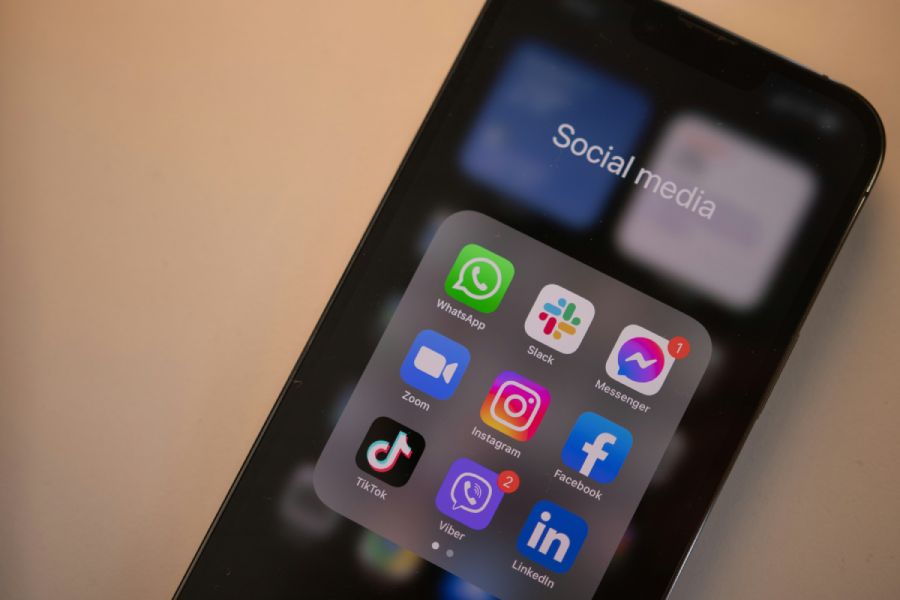
Social media strategy for businesses in Latin America

Trend 1: From content to performance as a strategic focus

One of the clearest conclusions of the study is that social networks have ceased to be solely a visibility channel and have become a business asset.

While brand awareness remains the primary objective, goals such as the following are growing strongly:

This marks a profound change: in 2026, successful social media strategies will be those that manage to balance branding and performance, without falling into extremes.

From Way2net’s perspective, this trend implies a key adjustment: each social network must fulfill a specific role within the funnel, and each piece of content must respond to a clear objective. Publishing without a defined strategic intention increasingly translates into a waste of resources.


Trend 2: Instagram continues to lead, but it’s no longer alone

Among the top social media trends for 2026, Instagram continues to occupy a central place in brand strategies in Latin America. Its strength lies in the balance between:

  • Organic reach
  • Variety of formats
  • Community
  • Advertising ecosystem

However, Instagram’s leadership is no longer absolute. Other platforms are gaining ground with very clear value propositions.

TikTok: growth, reach and discovery

TikTok is consolidating its position as the fastest-growing social network in terms of relevance by 2026. Its discovery-oriented algorithm and its dominance of short videos make it a key channel for brands seeking:

  • Massive reach
  • Rapid awareness
  • Connecting with younger audiences

For many Latin American companies, the challenge is not technical, but cultural: adapting the tone, language, and narrative to a platform that rewards authenticity over perfect aesthetics.

LinkedIn: the big winner in B2B

Another clear trend is the strengthening of LinkedIn as a strategic network for B2B companies. By 2026, LinkedIn will cease to be just a professional network and will become an active channel for demand generation, brand positioning, and thought leadership.

At Way2net we observe that more and more companies in Latin America are achieving concrete results when they combine:

  • Valuable content
  • Visible executive voices
  • Organic strategy + paid media

Trend 3: Short video ceases to be a trend and becomes infrastructure

If there’s one undisputed trend in social media for 2026, it’s the absolute dominance of short videos. Reels, Shorts, and TikToks are no longer a “format to try,” but the backbone of digital content.

The data shows that:

  • It is the format that generates the greatest reach
  • It’s the one that generates the most engagement.
  • It is the one most favored by the algorithms

This has direct implications for businesses:

  • Change the content planning
  • It affects the necessary resources
  • It forces us to rethink creativity

From a strategic perspective, the challenge is not to produce more videos, but to produce better videos, with a clear message, aligned with the business and designed to capture attention in the first few seconds.
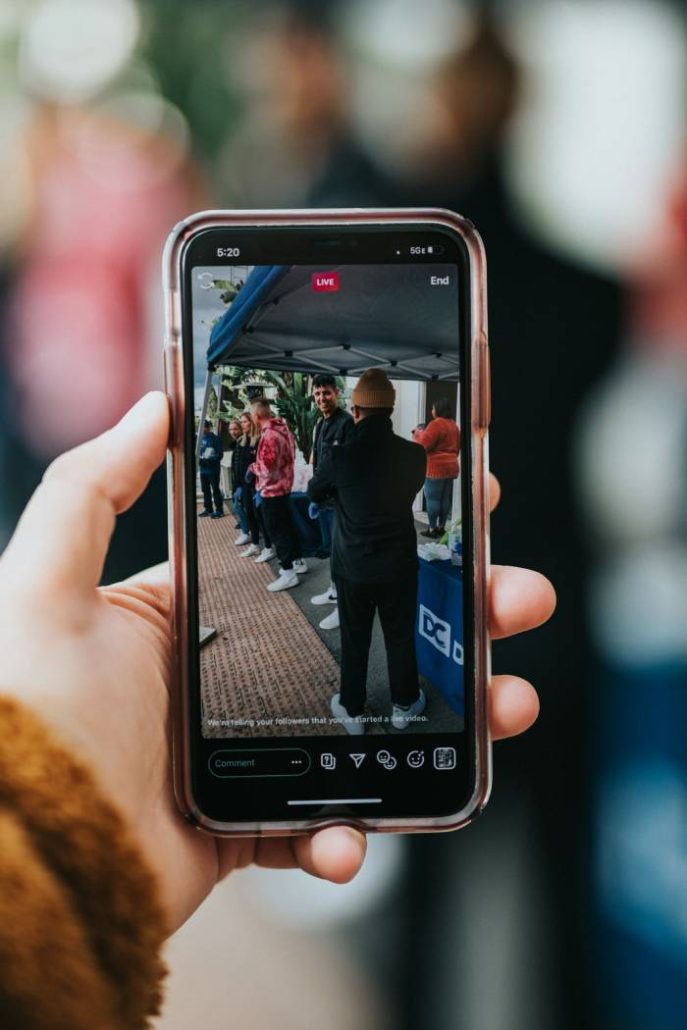
Short video as the main trend on social media in 2026

Trend 4: Content saturation and falling engagement

Paradoxically, while content production is increasing, average output is decreasing. Saturation appears to be the main challenge for 2026.

This translates to:

  • Lower organic reach
  • Fewer interactions per post
  • Increased competition for attention

The strategic takeaway is clear: publishing more no longer guarantees better results. In many cases, the opposite is true.

For brands in Latin America, this trend forces them to make difficult but necessary decisions:

  • Reduce platforms
  • Prioritize formats
  • Prioritize quality over quantity

At Way2net, we approach this scenario with a clear focus: less noise and more relevance. Differentiation is no longer about frequency, but about the real value that each piece of content brings.

Use of artificial intelligence in social media and digital marketing 2026

Trend 5: Artificial intelligence is becoming part of everyday life

Another major trend in social media for 2026 is the consolidation of artificial intelligence as an operational tool. Most professionals already use it for:

  • Copywriting
  • Content planning
  • Image and video creation
  • Data analysis

However, the real difference lies not in using AI, but in how it is used to provide digital marketing services for companies.

From a strategic perspective, AI:

  • Increase efficiency
  • Reduce operating times
  • Free up resources to think more strategically

But it also presents risks: homogenization of content, loss of identity, and saturation of generic messages.

At this point, Way2net’s vision is clear: AI should function as a strategic ally, not as a substitute for human judgment. The brands that manage to combine technology, creativity, and business acumen will be the ones that stand out in 2026.

Trend 6: Authenticity and User-Generated Content (UGC)

In an increasingly automated environment, authenticity is becoming a key differentiator. The study shows a growing interest in user-generated content, real testimonials, and more human formats.

The brands that best connect with their audiences are those that:

  • They humanize their communication
  • They show real processes
  • They prioritize closeness over perfection

For companies in Latin America, this trend represents a concrete opportunity to compete with tighter budgets, focusing on credibility and approachability instead of overly polished productions.

What should companies do today to prepare for 2026?

Based on the analysis of these trends, some clear lines of action emerge:

  1. Define which networks bring real value to the business
  2. Assign a strategic role to each platform
  3. Opt for short videos with a focus on message and objective
  4. Use AI to gain efficiency, not to lose identity
  5. Prioritize engagement and relevance over volume
  6. Measure, adjust, and optimize constantly

The role of an expert social media agency in this new scenario

The social media trends for 2026 present a more complex, competitive, and demanding landscape than ever before. For many companies, the main challenge is not execution, but making the right decisions.

This is where the support of a specialized social media agency makes sense. Not to “publish for the sake of publishing,” but to:

At Way2net, we support Latin American companies in navigating this context with a strategic approach, offering data-driven marketing services geared towards sustainable growth.


Conclusion: 2026 is not about doing more, but about doing better

Social media trends for 2026 don’t point to a sudden revolution, but rather to the channel’s definitive maturation. Less improvisation, more strategy. Less volume, more intention. Less ego, more value for the audience.

Brands that understand this shift will not only survive the digital noise, but will also build strong relationships, measurable results, and a relevant presence in the long term.


Do you want to prepare your social media strategy for 2026?

At Way2net we help companies in Latin America transform trends into actionable strategies, aligned with business objectives.

Contact Way2net and let’s talk about how to boost your social media strategy for 2026.

See more news from digital marketing trends and analysis
Top 20 Best Digital Marketing Agencies in Argentina (2026)

mejores agencias de marketing en Argentina

The 20 Best Digital Marketing Agencies in Argentina (2026): Take Your Business to the Next Level

In today’s digital age, every business, large, medium, or small, needs to stand out in a sea of ??competition. The key to achieving this lies in an effective and well-executed digital marketing strategy. In Argentina, the digital marketing landscape is brimming with talented and creative agencies that can take your brand to the next level. From search engine optimization to social media management, these agencies offer a range of services that can be tailored to your specific business needs. But how do you choose the best option among so many alternatives?

Below is a selection of the 20 best advertising agencies in Argentina, each distinguished by its innovation, experience, and results. Discover how these agencies can propel your business to success and help you navigate the ever-changing digital world.

Introduction to digital marketing in Argentina

Over the past decade, digital marketing has revolutionized how businesses communicate with their customers and promote their products and services. Argentina is no exception. With growing internet penetration and an increasingly connected population, companies have found digital marketing to be an indispensable tool for achieving their business objectives. From small startups to large corporations, everyone is looking to take advantage of the opportunities offered by the digital world to increase their visibility and, ultimately, their sales.

Digital marketing encompasses a wide variety of strategies and tactics, ranging from search engine optimization (SEO) and social media advertising to email marketing and content creation. Each of these strategies can be tailored and customized to the specific needs of each business, allowing for a more effective and targeted approach. In a market as competitive as Argentina’s, having a well-defined digital strategy can be the difference between success and failure.

However, implementing a digital marketing strategy is no easy task. It requires specialized knowledge, time, and resources. This is where the best digital marketing agencies in Argentina play a crucial role. These agencies are made up of teams of experts in various areas of digital marketing, who work together to create and execute effective campaigns. But how do you choose the right agency for your business? In this article, we’ll guide you through the essential criteria for making this decision and introduce you to the 20 best digital marketing agencies in Argentina.

Importance of choosing the right agency

Choosing the right advertising and digital agency is a critical decision that can significantly impact your business’s success. A competent agency will not only help you increase your online visibility but will also provide you with the tools and strategies needed to convert that visibility into loyal customers. Furthermore, a good agency will work with you to understand your business objectives and develop a customized plan that aligns with those goals.

On the other hand, selecting the wrong agency can result in a waste of time and resources. A poorly executed strategy can not only fail to attract clients but also damage your brand’s reputation. It’s essential that the agency you choose has a proven track record of success and can demonstrate how they’ve helped other businesses achieve their goals. Evaluating their portfolio, reading testimonials and success stories, and having an open conversation about your expectations are crucial steps in this process.

Furthermore, the relationship you establish with your digital marketing agency should be collaborative and based on trust. Open and consistent communication is essential to ensure both parties are aligned and that strategies are adjusted as needed. A good agency will not only offer solutions but also educate you and keep you informed about the latest trends and best practices in digital marketing. This ongoing collaboration is what will allow your business not only to survive but to thrive in the dynamic digital world.

Criteria for selecting an advertising agency

When selecting an advertising agency in Argentina, there are several criteria you should consider to ensure you make the best possible decision. The first criterion is the agency’s experience and track record. It’s important that the agency has a proven track record in the industry and can show concrete examples of its work and the results achieved for other clients. This will give you an idea of ??its ability to handle projects similar to yours. Having specific experience with similar clients and understanding your business is a significant plus.

Another crucial criterion is the range of services the agency offers. Some agencies specialize in specific areas of digital marketing, such as SEO or social media marketing, while others offer a more comprehensive approach. Depending on your needs, you might prefer an agency that can provide a complete solution covering all areas of digital marketing, or perhaps a specialized agency that can offer deeper expertise in a particular area would be more suitable.

The agency’s culture and philosophy are also important factors to consider. The agency you choose should share your values ??and have a vision aligned with your business. This will facilitate collaboration and ensure both parties are working toward the same goals. Furthermore, it’s essential that the agency has a results-oriented approach, with a clear methodology for measuring and reporting campaign performance. Transparency in communication and the ability to adapt and react quickly to market changes are characteristics that should be present in any agency you consider.

Top 20 best advertising agencies in Argentina (2026)

1. Way2net

best digital marketing agencies in Argentina

Let’s start with our own :) Way2net stands out for its comprehensive approach to digital marketing strategies, which include Marketing and Communication Consulting, SEO, SEM, Online Advertising, Social Media Marketing, and Content Creation. Their team of experts works in collaboration with clients to develop customized campaigns that generate measurable results. With a solid reputation in the market, Way2net has helped numerous companies increase their online presence and achieve their business objectives.

Services offered:

  • Digital Marketing Consulting and Coaching
  • Search Engine Optimization (SEO)
  • Online advertising, including Google Ads and ads on Facebook, Instagram and Social Networks, as well as Programmatic
  • Inbound campaigns & e-mailing marketing
  • Graphic design, corporate image and website design
  • Landing pages and web development
  • E-commerce stores and online sales sites
  • Professional Social Media Management, Social Media Marketing – Community Management for businesses
  • Branding, Brand Positioning, Digital Press and Communication

Way2net has undoubtedly established itself in recent times as one of the best digital marketing agencies in Argentina and LATAM.

2. CoffeeTalk Digital Agency

digital marketing agency in Buenos Aires

CoffeeTalk: Full-service agency: design, development, digital campaigns (Google, Meta, TikTok) and consulting. They define themselves as partners of their clients, not an agency that “does something once.”

3. Wasd

wasd marketing digital

Wasd: Focused on digital marketing, content & communication for startups, technology and gaming companies. They work with creativity, strategy and digital campaigns.

4. Wunderman Thompson Argentina / VML Argentina

vml argentina agencia de marketing

Wunderman Thompson Argentina is a global agency with a strong presence in the Argentinian market. They specialize in creating unique brand experiences through the integration of data, creativity, and technology. Their services include content marketing, digital advertising, data analytics, and more. With a focus on innovation and excellence, they have worked with some of the world’s most recognized brands.

5. Leadaki

online advertising agency leadaki

Leadaki: An agency specializing in full-funnel and performance strategies, with a strong focus on data, automation, and cross-channel optimization. It is a Google Premier Partner.

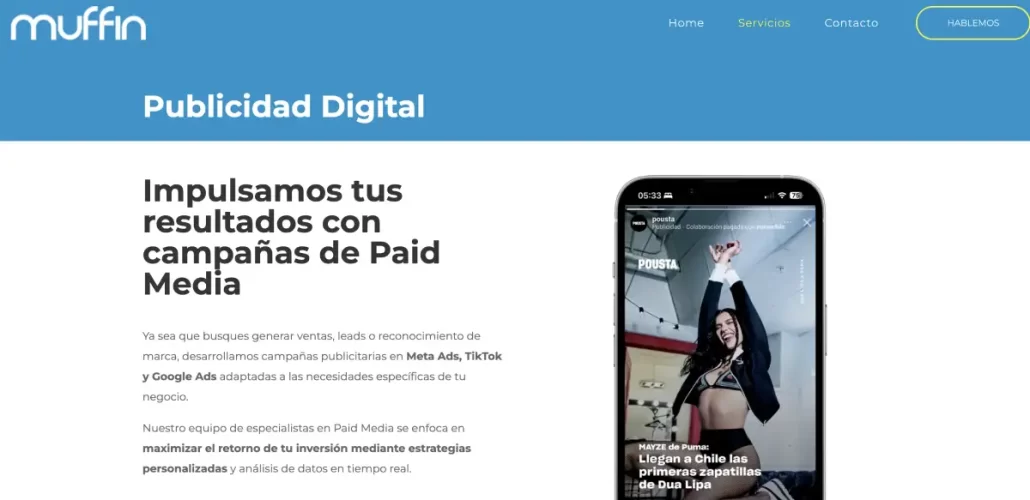
6. Muffin Agencia de Marketing Digital

muffin marketing online

Agency focused on social media, Google Ads and account management, with a presence in La Plata and clients in LATAM.

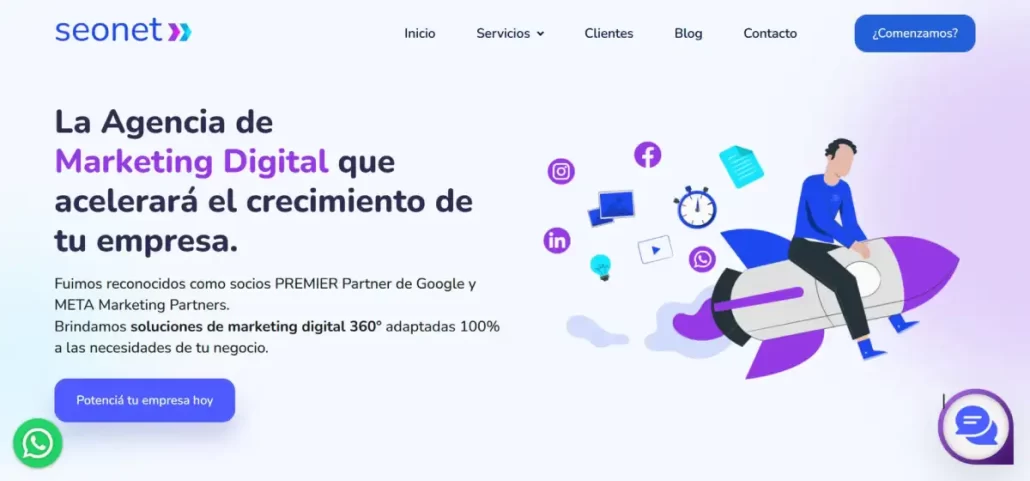
7. SEONET

agencia seonet

Seonet is a full-service digital marketing agency offering a wide range of services, from content creation to advertising campaign management. Their focus on personalization and attention to detail allows them to develop effective strategies that resonate with target audiences. They have worked with clients across various sectors, helping them increase their visibility and generate tangible results.

8. Bloop Agency

bloop agency

Marketing agency that blends performance + content + technology to scale e-commerce and B2B.

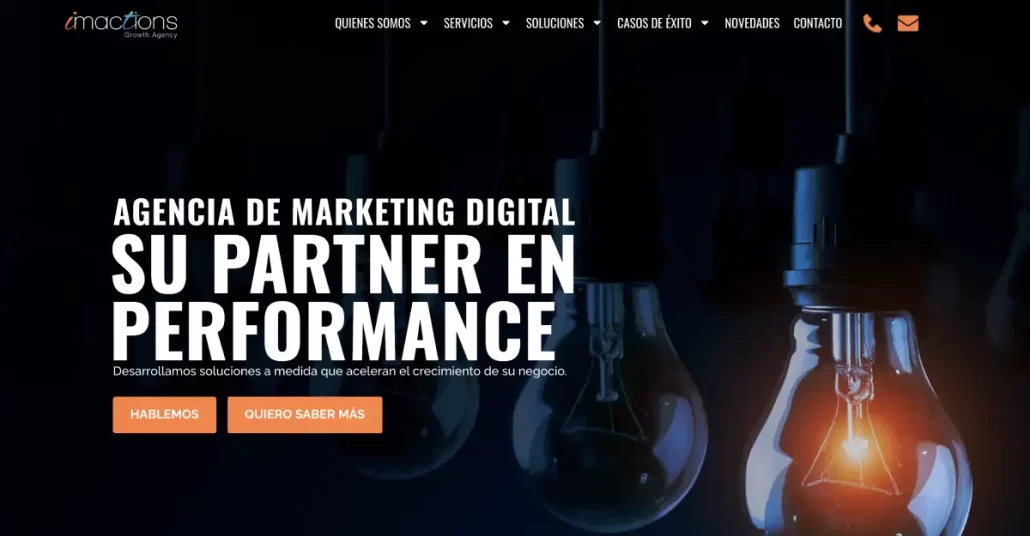
9. Imactions

imactions agency

Imactions is a digital agency that offers comprehensive services (social, paid, strategy) with an emphasis on measurable results.

10. MD Marketing Digital

md marketing digital

We have an incredible capacity for adaptation and, without exception, we develop unique proposals for each client. From startups to large corporations, we do tailor-made marketing.

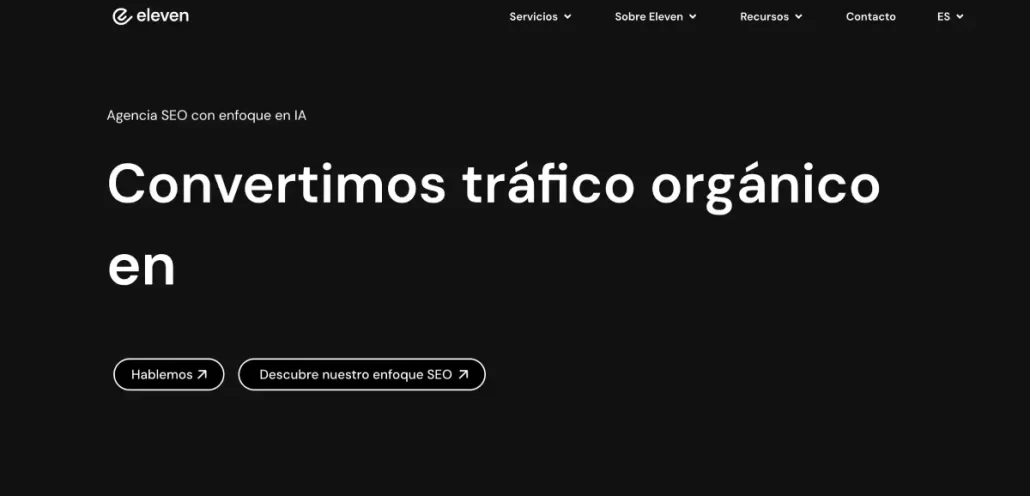
11. Agencia Eleven

marketing agency eleven

Eleven Agency stands out for its focus on performance marketing and campaign optimization. They offer SEO, SEM, social media advertising, and other services, with a focus on maximizing return on investment. Their team of experts works in partnership with clients to develop customized strategies that generate measurable and sustainable results.

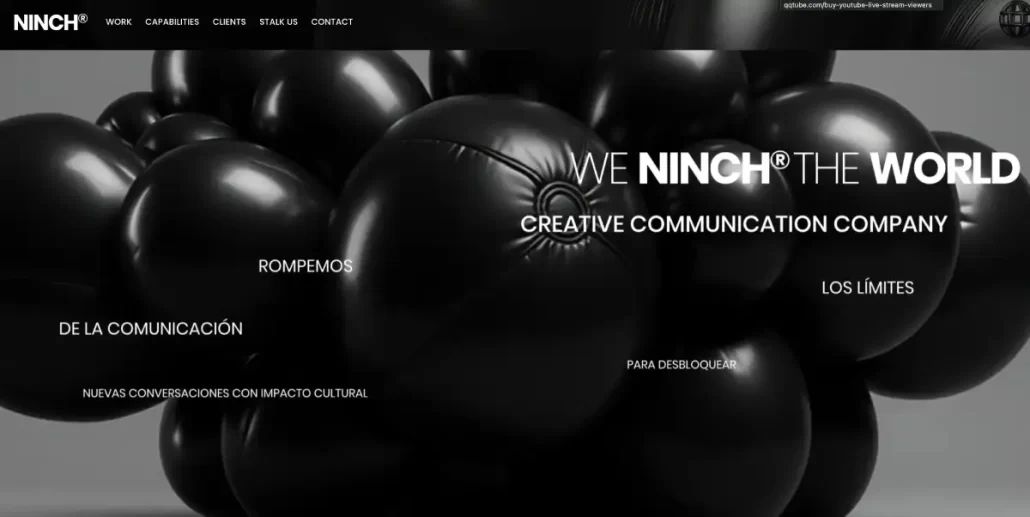
12. Agencia Ninch

agencia marketing ninch

Ninch Agency is a digital marketing agency specializing in content creation and social media management. Their focus on storytelling and high-quality content creation allows them to connect effectively with audiences. They offer SEO, content marketing, online advertising, and other services, with a focus on building long-lasting client relationships.

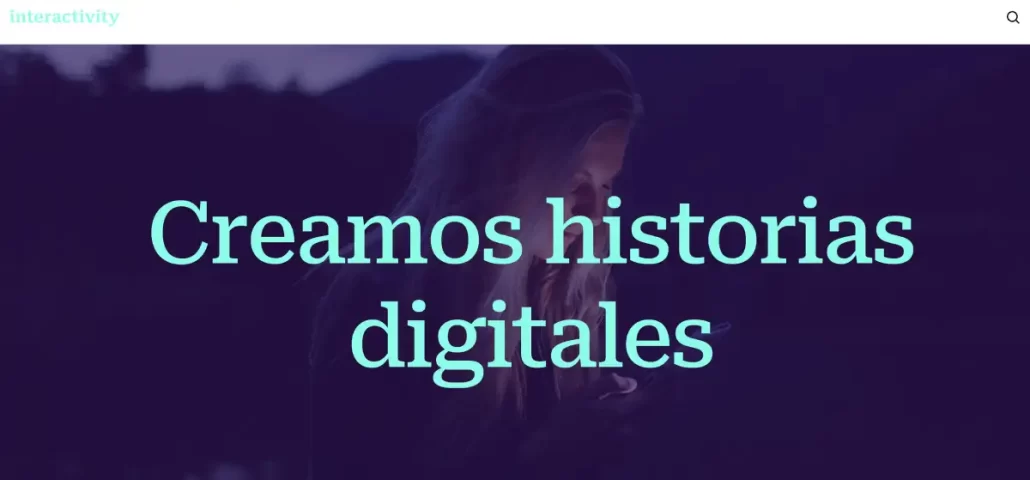
13. Agencia Interactivity

agencia interactivity

Interactivity Agency focuses on creating engaging digital experiences that deliver results. Their services include web design, social media marketing, SEO, and online advertising. With a team of professionals passionate about technology and creativity, they have helped numerous companies improve their online presence and achieve their marketing goals.

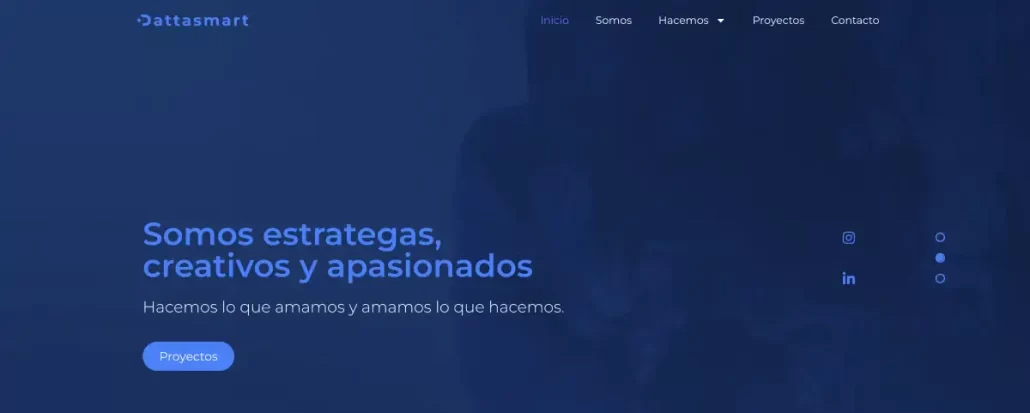
14. Agencia Dattasmart

maketing agency dattasmart

Communication and marketing agency with offices/operations in Argentina and Spain: branding, UX/UI, content and campaigns.

15. Agencia Buffalo

agencia buffalo

Our Buenos Aires-based team can respond to the diverse needs of our clients in marketing, online sales, social media management, corporate design, and web design and development. We offer solutions for businesses in Digital Design and SEO.

16. Mejor Digital

agencia mejor digital

As an innovative Digital Marketing agency, we develop comprehensive solutions that are attentive to the evolution of the Internet, Social Media, and the user experience with brands. We know the digital marketing tools you need to differentiate yourself, gain visibility, and position your products.

17. Agencia Zetenta

Zetenta interactive marketing agency

We are an interactive advertising agency specializing in online and mobile marketing, social media, digital branding and web development with offices in Buenos Aires, Argentina.

Our main strength is the ability to combine different talents to meet complex communication needs, blending creativity, design and technology to create authentic relationships between brands and consumers.

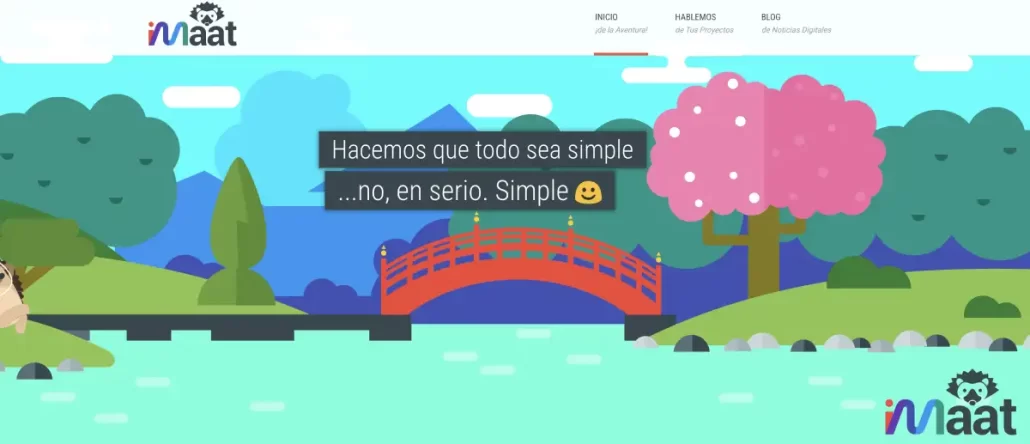
18. Agencia Imaat

imaat online marketing

We are a Digital Marketing Agency located in Buenos Aires, Argentina. We are a full-service agency. This means that we not only provide advertising services and advice but also cover all the necessary areas to transform and enhance your brand. We create a brand identity and give you a unique style to differentiate you from the rest. We develop your online presence: We create your company’s website and strengthen availability and communication with your potential clients through social media. We expand the reach of your sales channels with Google AdWords campaigns and build customer loyalty and attract new opportunities through organic email marketing. Finally, we produce videos and audiovisual content to take your company to the next level.

19. Agencia Buhomedia

agencia buhomedia

As a digital marketing company, we create unique digital experiences through our services: Digital Marketing, Google Ads, Web Design, E-commerce, Community Management, Hosting, Newsletters, and Corporate Videos

20. El Cielo Digital

el cielo digital

El Cielo Digital, with more than 10 years of experience, drives the growth of SMEs through digital strategies that increase their online presence and generate high-value leads.

Our experience allows us to help our clients plan, build, and execute everything related to their company’s digital marketing.

Services offered by featured agencies

The best digital marketing agencies in Argentina offer a wide range of services designed to improve businesses’ online presence and generate measurable results. One of the most common services is search engine optimization (SEO). SEO is crucial for improving a website’s visibility in organic search results, which can increase traffic and conversions. SEO agencies use a variety of techniques, such as keyword research, content optimization, and link building, to improve website rankings.

Another essential service is social media marketing. Agencies help businesses create and manage profiles on platforms like Facebook, Instagram, Twitter, and LinkedIn. This includes creating engaging content, managing communities, and running paid advertising campaigns. Social media is not only an effective platform for promoting products and services, but it also allows businesses to interact directly with their customers and build lasting relationships.

In addition, many agencies offer digital advertising services, including managing pay-per-click (PPC) campaigns on platforms like Google Ads and Bing Ads. Digital advertising allows businesses to efficiently reach a specific audience and measure campaign performance in real time. Other common services include content marketing, email marketing, web design and development, and data analytics. Each of these services can be customized to meet the specific needs of each business, ensuring an effective and well-executed digital marketing strategy.

Price comparison and service packages

The cost of digital marketing services can vary significantly depending on the agency and service package you choose. Some agencies offer basic packages that include essential services like SEO and social media management for a fixed monthly price. These packages can be a good option for small businesses or startups with limited budgets that still want to improve their online presence.

On the other hand, larger or more specialized agencies can offer customized packages that include a wider range of services, such as consulting, digital advertising, content marketing, and data analytics. These packages are typically more expensive, but they also offer a more comprehensive approach and a greater ability to adapt to the specific needs of each business. It’s important to carefully assess your company’s needs and compare the different packages and prices before making a decision.

How to Choose a Digital Marketing Agency in LATAM: 10 Criteria to Make the Right Choice

como elegir una agencia de marketing
contratar una agencia de marketing digital: ¿cómo la elijo?

Choosing a digital marketing agency should not be reduced to comparing budgets. Two agencies may offer similar services and yet work with completely different methodologies, teams, and objectives.

Before hiring an agency, it is important to evaluate whether it understands your business, how it measures results, who will work on your account, what its proposal actually includes, and whether it can support your growth objectives.

This becomes even more important when working across Latin America. Argentina, Mexico, Colombia, Chile, Peru, and Brazil are not interchangeable markets. Consumer behavior, competition, search patterns, media costs, and business environments can vary significantly from one country to another.

In this guide, we explain the key criteria for comparing digital marketing agencies in LATAM and making a better-informed decision.

1. Define What You Need Before Looking for an Agency

Before comparing digital marketing agencies, it is important to define what your company actually needs. Not every organization has the same objectives or needs to work across the same channels.

Some companies are looking to generate leads and business opportunities. Others need to increase online sales, improve their search visibility, strengthen their brand, or develop an integrated digital strategy.

It is also important to consider your business model, target audience, sales cycle, the markets where you compete, and the resources available internally.

The clearer you are about the problem you need to solve, the easier it will be to determine whether an agency has the experience and capabilities required to help you.

Companies with experience know that not all agencies offer the same level of support or the same approach. Therefore, before hiring a digital marketing agency, it is important to evaluate several essential criteria.

2. Choose the Right Type of Agency for Your Business

Not all digital marketing agencies work in the same way. Some specialize in specific disciplines, while others offer integrated or full-service solutions.

Among the main alternatives are:

  • Performance agencies: focused on digital advertising, customer acquisition, and measurable results.
  • SEO agencies: specialized in organic search visibility and traffic generation.
  • Social media agencies: focused on content, social media management, and community building.
  • Branding agencies: focused on brand identity, positioning, and creative strategy.
  • Web design and development agencies: specialized in websites, e-commerce, and digital experiences.
  • Full-service agencies: integrate strategy, advertising, SEO, content, social media, web development, and other marketing disciplines.

The right option depends on your company’s needs. A business with a specific challenge may benefit from a specialized agency, while a company looking for an integrated marketing strategy may benefit from working with a full-service agency.

For companies operating across LATAM, it is also important to consider whether the agency can coordinate different disciplines and markets under a common strategic approach.

How to Choose a Digital Marketing Agency in LATAM

3. Evaluate Whether the Agency Understands Your Business

A good agency should start by asking questions, not by presenting a package of services.

Before recommending actions, it should understand your business model, target audience, sales process, main competitors, and growth objectives.

Ask how the agency conducts its initial diagnosis and how it transforms that information into a marketing strategy.

This is particularly important in LATAM, where a strategy that works in one country may need to be adapted for another market.

The agency should be able to understand both your overall business objectives and the specific characteristics of the markets where you operate.

4. Review How the Agency Measures Results

In digital marketing, results need to be measured.

A serious agency should present clear performance indicators, provide regular reports, and propose actions based on data.

If an agency only talks about “reach” or “likes” without discussing conversion or return metrics, this should be considered a warning sign.

Not every metric has the same value for every business. Reach, impressions, clicks, or followers can be useful, but they should be connected to business metrics when the objective is to generate commercial results.

Depending on the project, relevant metrics may include leads, business opportunities, sales, customer acquisition cost, conversion rate, ROAS, or return on investment.

Before hiring an agency, ask which indicators it will use to determine whether the strategy is working.

For regional LATAM campaigns, it is also useful to understand results by country, market, and channel rather than looking only at aggregated regional figures.

5. Meet the Team That Will Work on Your Account

It is not enough to know how many people work at an agency. It is important to understand who will be involved in your project and what responsibilities each person will have.

Before hiring, ask:

  • Who will be my main point of contact?
  • Who develops the strategy?
  • Who executes the campaigns?
  • Who analyzes the results?
  • Which specialists will participate?
  • Is the team internal or outsourced?

The quality of the team and the coordination between its members can be just as important as the number of services offered.

For a LATAM project, coordination becomes even more relevant when different countries, channels, or local requirements are involved.

6. Review Experience and Case Studies

Review the agency’s portfolio and case studies.

Agencies with experience should be able to demonstrate how they helped other companies —of similar size or facing comparable challenges— improve their results. It is not simply about showing well-known clients, but about demonstrating processes, learnings, and measurable results.

However, do not limit your evaluation to a list of clients. A good case study should explain, at a minimum, what the challenge was, what strategy was implemented, and what results were achieved.

It is also useful to look for experience with companies that have similar characteristics: size, business model, market, target audience, or sales process complexity.

An agency does not necessarily need to have worked in your exact industry to be the right choice, but it should be able to demonstrate that it understands comparable business challenges.

If your company operates across LATAM, also ask about the agency’s experience working with different Latin American markets and adapting strategies to local conditions.

7. Evaluate the Level of Support

Your relationship with the agency should feel like a partnership.

A good agency does not simply execute. It supports, advises, and anticipates scenarios. Choose an agency that understands your business rhythm and becomes involved as an extension of your team.

An agency may execute a campaign correctly and still not be the right partner for your company.

Evaluate how communication will work, how frequently you will have meetings, how reports will be delivered, and who will be available to discuss strategic decisions.

The goal should be to build a working relationship in which the agency does not simply receive requests, but also proposes ideas, analyzes results, and identifies opportunities.

8. Compare What Each Proposal Actually Includes

Two agencies can present very different budgets for apparently similar services. Therefore, comparing only the monthly price can lead to the wrong decision.

Before choosing, review what each proposal includes:

  • Strategy and planning
  • Number and type of campaigns
  • Advertising management
  • Content creation
  • Design
  • SEO
  • Web development
  • Reporting
  • Meetings
  • Tools
  • Team allocation or estimated dedication
  • Support and optimization

A lower-cost proposal does not necessarily represent better value.

The important thing is to understand what problem each agency is solving, how it plans to solve it, and what resources it will allocate to the project.

For LATAM projects, also clarify whether the proposal covers all target markets or whether additional work or fees may apply to individual countries.

9. How Much Does It Cost to Hire a Digital Marketing Agency?

The cost of hiring a digital marketing agency can vary considerably depending on the type of company, objectives, channels involved, and level of dedication required.

There is therefore no single price that can determine whether a proposal is expensive or affordable.

When comparing budgets, distinguish between the agency fee and other costs such as advertising investment, content production, web development, tools, or additional services.

For regional projects, the number of markets involved can also influence the scope and resources required.

Rather than simply looking for the lowest price, evaluate the relationship between investment, scope of services, team experience, and expected results.

10. Signs You Are Looking at a Good Digital Marketing Agency

There are several characteristics that can help you identify a professional agency.

A good agency:

  • Asks questions before offering solutions.
  • Understands your business objectives.
  • Explains its methodology clearly.
  • Presents a defined team.
  • Shows relevant experience and case studies.
  • Defines measurable KPIs.
  • Maintains transparency regarding accounts and data.
  • Adapts the strategy according to results.
  • Proposes improvements instead of simply executing requests.
  • Can explain its recommendations clearly.
  • Focuses on business results rather than trends alone.

And above all, a good agency makes you feel supported.

If every meeting ends with new ideas, clear diagnoses, and concrete actions, you are probably on the right track. hace sentir acompañado. Si cada reunión termina con nuevas ideas, diagnósticos claros y acciones concretas, probablemente estás en el camino correcto.

digital marketing agency LATAM

11. Warning Signs When Hiring an Agency

There are also signs that should make you review a proposal carefully before moving forward.

Guaranteed results. Marketing depends on multiple variables. A serious agency should discuss objectives, hypotheses, testing, and optimization rather than guaranteeing results it cannot fully control.

A generic proposal. If the document could be sent almost unchanged to any company, there may not have been enough diagnosis or strategic work.

Exclusive focus on vanity metrics. Followers, likes, or impressions do not necessarily represent commercial growth.

Lack of transparency. Your company should understand which accounts, data, platforms, and digital assets are being used.

No explanation of who will work on the project. The team is a fundamental part of the service.

Price as the only argument. A proposal should explain what will be done, why it will be done, and how results will be measured.

For LATAM projects, another warning sign is treating the entire region as a single homogeneous market without considering local differences.

12. How to Compare Digital Marketing Agencies Before Deciding

Once you have two or three proposals, you can compare them using a simple matrix.

Do not evaluate only the price. Analyze strategy, team, experience, methodology, measurement capabilities, and regional expertise.

CriteriaWhat to Evaluate
StrategyDoes the agency understand your business objectives?
ExperienceDoes it have relevant case studies?
LATAM expertiseDoes it understand the markets where you operate?
TeamWho will actually work on your account?
ServicesWhat does the proposal really include?
MeasurementWhich KPIs will be tracked?
TransparencyWill you have access to accounts and data?
CommunicationHow will the agency communicate and report?
AdaptabilityCan the strategy evolve based on results?
PriceWhat does the fee actually include?

A structured comparison can help you identify the real differences between agencies and avoid making a decision based only on price.

13. Is the Agency Prepared for the New Search Environment?

Digital visibility is no longer limited to appearing on Google.

Users increasingly rely on AI-powered platforms such as ChatGPT, Gemini, Perplexity, and Claude to research companies, compare alternatives, and make purchasing decisions.

For this reason, when evaluating a digital marketing agency, it is increasingly relevant to understand whether it works with:

A modern digital visibility strategy should consider both traditional search engines and AI-powered answer engines.

For companies operating across LATAM, this creates an additional opportunity: building a consistent digital presence across markets while developing the authority and relevance needed to be discovered through both traditional and generative search.

Why Choose Way2Net?

Way2Net combines strategic marketing consulting with integrated execution.

Our approach is based on understanding each company’s needs and developing an appropriate digital marketing plan rather than simply executing isolated actions.

We work as an external marketing team for companies that need to combine planning, execution, and results under one roof.

Our services include digital marketing strategy, online advertising, SEO, social media, web development, and other digital marketing disciplines, depending on each company’s objectives.

We analyze, plan, and execute with a focus on results.

The objective is to turn digital marketing from an expense into a genuine growth engine for your business.

If you are evaluating agencies, the most important question is not simply which agency offers the most services.

It is which agency can understand your business, develop the right strategy, execute it effectively, and continuously optimize it based on results.

Conclusion

Choosing a digital marketing agency should not be based solely on price or the number of services included in a proposal.

The right agency should understand your business, your customers, your objectives, and the markets where you compete.

For companies operating across LATAM, this requires an additional level of expertise: the ability to combine regional strategy with an understanding of local markets.

Before making a decision, evaluate the agency’s experience, team, methodology, case studies, communication, transparency, and ability to connect marketing actions with business results.

Ultimately, you are not simply hiring a marketing provider.

You are choosing a strategic partner that can help turn digital marketing into a growth engine for your business across LATAM.

Are you looking for a digital marketing agency to grow your business in LATAM? Contact Way2Net and let’s discuss your strategy.

Frequently Asked Questions

How do I choose a digital marketing agency?

Evaluate its experience, methodology, team, strategic capabilities, approach to measuring results, transparency, and level of support. It is also important to determine whether the agency understands your business objectives.

How much does it cost to hire a digital marketing agency?

The cost depends on the services, objectives, channels, markets, and level of dedication required. When comparing budgets, distinguish the agency fee from advertising investment and other additional costs.

What should a digital marketing agency proposal include?

A proposal should explain objectives, strategy, services, methodology, team, deliverables, KPIs, reporting frequency, investment, and commercial terms.

Is it better to hire a specialized or full-service agency?

It depends on your company’s needs. A specialized agency can be appropriate for solving a specific challenge, while a full-service agency can be a better fit when several marketing disciplines need to be integrated under a common strategy.

What questions should I ask a digital marketing agency before hiring it?

Ask about experience, team, methodology, KPIs, tools, case studies, reporting frequency, access to accounts, and exactly what is included in the monthly fee.

How do I choose a digital marketing agency for LATAM?

In addition to evaluating strategy, team, experience, and results, consider whether the agency understands the different markets where you operate and can coordinate a regional strategy while adapting execution to local conditions.

Should I choose a local agency or a LATAM agency?

It depends on your objectives. If you operate in one market, local expertise may be particularly valuable. If you operate across several Latin American countries, an agency capable of coordinating a regional strategy can simplify management and improve consistency.

Is SEO enough to build digital visibility today?

SEO remains essential, but search behavior is evolving. Companies should increasingly consider SEO together with AEO and GEO to improve their visibility across traditional search engines, answer engines, and AI-powered search experiences.

Social Media Statistics in Argentina 2025

estadisticas de redes sociales en argentina 2025

We Are Social and Meltwater presented the updated report on social media statistics in Argentina Digital 2025. We will discuss the data recorded on the digital situation in Argentina in 2024-2025.

Use of mobile phones, Internet and social media networks

Social Media Statistics in Argentina 2025

A total of 64.7 million mobile cellular connections were active in Argentina at the beginning of 2025, representing 141% of the total population. However, it should be noted that some of these connections may only include services such as voice and SMS, and some may not include internet access.

There were 41.2 million individuals using the internet in Argentina at the beginning of 2025, when online penetration was 90.1%.

Argentina was home to 32.2 million social media user identities in January 2025, which is equivalent to 70.3% of the total population.

General summary of Internet use in Argentina

Internet use in Argentina

At the time of writing the report, the latest available data indicated that there were 41.2 million internet users in Argentina in January 2025.

This means that the internet penetration rate in Argentina stood at 90.1% of the total population at the beginning of the year.

Meanwhile, Kepios’ analysis indicates that the number of internet users in Argentina increased by 542,000 (+1.3%) between January 2024 and January 2025.
To add perspective, the Internet adoption rate in Argentina (i.e., the percentage of the total population using the Internet) increased by a relative 1% (+88 basis points) during the same period.

Use of social media in Argentina

Use of social media in Argentina

DataReportal figures show that in January 2025 there were 32.2 million active social media users in Argentina.

In perspective, this figure was equivalent to 70.3% of the total population of Argentina at the beginning of 2025.

Kepios’ analysis shows that social media user identities in Argentina increased by 900,000 (+2.9%) between early 2024 and early 2025.
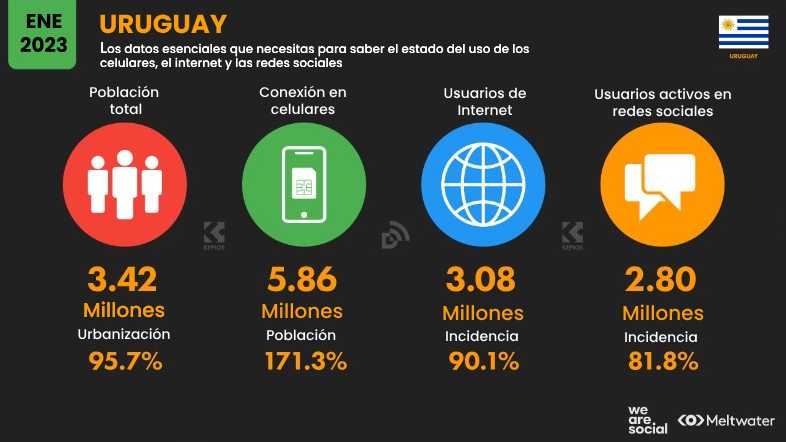
Turning our attention back to user demographics, data published in the ad planning tools of major social media platforms indicates that there were 29.1 million users over the age of 18 using social media in Argentina at the beginning of 2025, which was equivalent to 85.5% of the total population aged 18 and over.

Most used Social Media Platforms in Argentina

Most used Social Media Platforms in Argentina

WhatsApp (93% of internet users) remains the most used platform in Argentina, among people aged 16 to 64.

TikTok continues to grow among the most used platforms, although it is still not close to the top 3. It ranks as the fourth most used platform (58.4%).

Facebook audience statistics

Facebook advertising in Argentina

Data published in Meta’s advertising resources indicates that Facebook had 29.1 million users in Argentina at the beginning of 2025.

However, Meta has made significant changes to how its advertising resources report audience data in recent months – including making significant revisions to published audience data – so the figures shown here may not be directly comparable to those published in previous reports.

Figures published in Meta’s own tools indicate that the potential reach of Facebook ads in Argentina increased by 300,000 (+1%) between January 2024 and January 2025.

For a more recent context, the same data shows that the number of users that marketers could reach with Facebook ads in Argentina increased by 400,000 (+1.4%) in the three months between October 2024 and January 2025.

Instagram audience statistics

Instagram audience statistics in argentina

The numbers published in Meta’s advertising tools indicate that Instagram had 28.9 million users in Argentina at the beginning of 2025.

The company’s regularly reviewed figures suggest that Instagram’s ad reach in Argentina was equivalent to 63.1% of the total population at the beginning of the year.

However, Meta only allows people over the age of 13 to use Instagram, so it is also worth noting that 76.8% of the “eligible” audience in Argentina used Instagram at the time of the report’s production.

Data published in Meta’s planning tools shows that the potential reach of Instagram ads in Argentina increased by 1.05 million (+3.8%) between January 2024 and January 2025.

Quarterly, the company’s data also reveals that the size of Instagram’s ad audience in Argentina increased by 650,000 (+2.3%) between October 2024 and January 2025.

TikTok audience statistics

TikTok audience statistics in Argentina

Figures published in TikTok’s advertising resources indicate that at the beginning of 2025 there were 24.4 million users over the age of 18 in Argentina.

TikTok allows marketers to target TikTok ads to users over the age of 13 through its advertising tools, but these tools only show audience data for users over the age of 18.

TikTok’s figures indicate that TikTok ads reached 71.8% of all adults over 18 years of age in Argentina by early 2025.

Data published in TikTok’s own advertising planning tools shows that TikTok’s potential advertising reach in Argentina increased by 3.12 million (+14.7%) between early 2024 and early 2025.

Meanwhile, the figures indicate that the potential reach of ads on TikTok in Argentina increased by 1.07 million (+4.6%) between October 2024 and January 2025.

LinkedIn audience statistics

LinkedIn audience statistics in Argentina

Data published in LinkedIn’s planning tools shows that the potential reach of LinkedIn ads in Argentina increased by 2 million (+15.4%) between the beginning of 2025 and the beginning of 2026.

Quarterly, the company’s data reveals that the audience size for LinkedIn ads in Argentina remained the same between October 2024 and January 2025.

Linkedin continue to be the most important B2B social media platform for every digital marketing agency specialized in corporate marketing

X (Twitter) audience statistics

X (Twitter) audience statistics in argentina

Data published in X’s own advertising planning tools shows that X’s potential advertising reach in Argentina decreased by 1.21 million (-14.3%) between early 2024 and early 2025.

Meanwhile, the same data shows that the number of users marketers could reach with ads on X in Argentina decreased by 347,000 (-4.6%) between October 2024 and January 2025.

However, it should be noted that the figures published in X’s planning tools are subject to significant fluctuations – even over short periods of time – and these anomalies can affect the reliability and representativeness of these change figures.

Digital Advertising Spending

Digital Advertising Spending in argentina
Digital Advertising in argentina

Spending on digital advertising increased by 9.5% in the last year. This equates to more than $150 million USD.

Of the total $1.74 trillion USD invested in digital advertising in 2024, the following is shown:

– $668 million USD was allocated to search engine campaigns.

– $423 million USD was spent on video advertising, while $394 million was spent on banner ads.

– $76 million USD was invested in influencer marketing.

– $38.2 million USD was spent on classified ads.

Source: Digital.

These statistics clearly demonstrate the importance of continuing to rely on a digital strategy agency for the development of any company in today’s world.

Read more Digital Marketing news.

Social Media Statistics Peru 2025

Estadísticas de Redes Sociales Perú 2025

We Are Social and Meltwater presented the updated report Digital 2025 on Social Media Statistics in Peru. We will discuss the data recorded on the digital situation in Peru in 2024-2025.

Use of Devices, Internet and Social Networks

Use of Devices, Internet and Social Networks in Peru

A total of 39.4 million mobile cellular connections were active in Peru at the beginning of 2025, equivalent to 115% of the total population. However, some of these connections may only include services such as voice and SMS, and some may not include internet access.

27.3 million people used the internet in Peru at the beginning of 2025, when online penetration was 79.5%.

In January 2025, Peru had 24.5 million social media users, which is equivalent to 71.2% of the total population.

These main statistics offer a great overview of the “digital state” in Peru at the beginning of 2025, but to understand how digital trends and behaviors have evolved over time, we need to delve deeper into the data.

General Summary of Internet Use

Social Media Statistics Peru 2025

At the time of writing the report, the latest available data indicated that there were 27.3 million internet users in Peru in January 2025.

This means that the internet penetration rate in Peru was 79.5% of the total population at the beginning of the year.

Meanwhile, Kepios’ analysis indicates that the number of internet users in Peru increased by 291,000 (+1.1%) between January 2024 and January 2025.
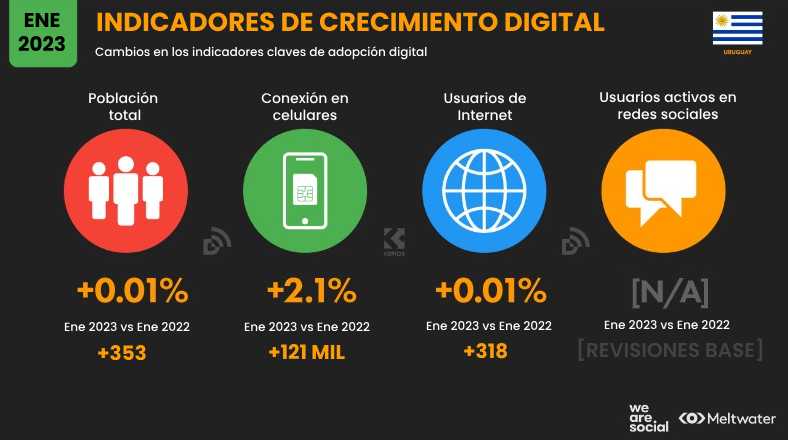
Social Media Statistics Peru – General Summary of Social Media Use

Social Media Statistics Peru - General Summary of Social Media Use

DataReportal figures show that in January 2025 there were 24.5 million active social media users in Peru.

In perspective, this figure was equivalent to 71.2% of the total population at the beginning of 2025.

The analysis by Kepios shows that the identities of social media users in Peru increased by 450,000 (+1.9%) between the beginning of 2024 and the beginning of 2025.
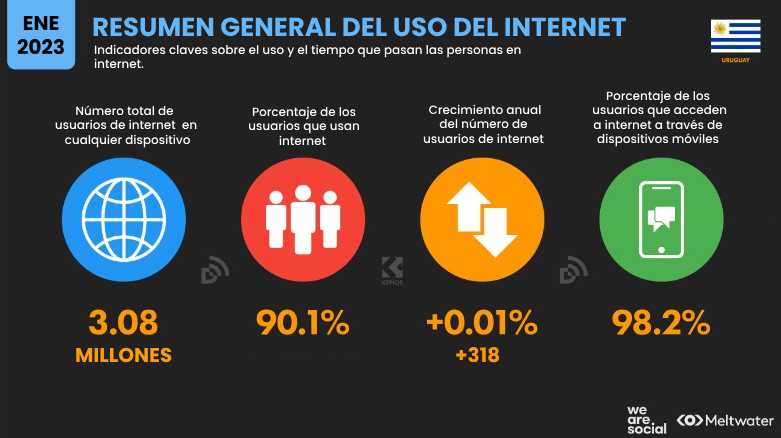
Data published in the ad planning tools of major social media platforms indicates that there were 24.5 million users over the age of 18 using social media in Peru at the beginning of 2025, which was equivalent to 99.8% of the total population aged 18 and over.

At that time, 46.6 percent of social media user identities in Peru were female, while 53.4 percent were male.

And to add context, it may be helpful to know that 89.6% of Peru’s total internet user base (regardless of age) used at least one social media platform in January 2025.

Social Media Statistics Peru 2025 – YouTube Audience

YouTube Audience Social Media Statistics Peru 2025

Google’s advertising resources indicate that YouTube had 19.1 million users in Peru at the beginning of 2025.

The company’s own data suggests that the reach of the YouTube ad in early 2025 was equivalent to 55.5 percent of the total population of Peru at the beginning of the year.

To put these figures into perspective, YouTube ads reached 69.8% of Peru’s total internet user base (regardless of age) in January 2025.

At that time, 47.9% of YouTube’s adult ad audience in Peru was female, while 52.1% was male.

Data published in Google’s own advertising planning tools shows that the potential reach of YouTube ads in Peru increased by 1.5 million (+8.5%) between early 2024 and early 2025.

Social Media Statistics Peru 2025 – Facebook Audience

Facebook Audience

Figures published in Meta’s own tools indicate that the potential reach of Facebook ads in Peru increased by 450,000 (+1.9 percent) between January 2024 and January 2025.

In a more recent context, the same data shows that the number of users that marketers could reach with Facebook ads in Peru increased by 650,000 (+2.7%) in the three months between October 2024 and January 2025.

Facebook ads reached 71.2 percent of the total population in Peru at the beginning of 2025. This reach was equivalent to 89.6% of the local internet user base (regardless of age) in January 2025.

Social Media Statistics Peru 2025 – Instagarm Audience

Instagram Audience

The numbers published in Meta’s advertising tools indicate that Instagram had 10.5 million users in Peru at the beginning of 2025.

The company’s regularly revised figures suggest that Instagram’s ad reach in Peru was equivalent to 30.4% of the total population at the beginning of the year.

Data published in Meta’s planning tools shows that the potential reach of Instagram ads in Peru increased by 450,000 (+4.5%) between January 2024 and January 2025.

Quarterly, the company’s data also reveals that the size of Instagram’s ad audience in Peru increased by 250,000 (+2.5%) between October 2024 and January 2025.

Social Media Statistics Peru 2025 – TikTok Audience

TikTok Audience

Data published in TikTok’s own advertising planning tools shows that TikTok’s potential advertising reach in Peru increased by 2.49 million (+11.4 percent) between early 2024 and early 2025.

Meanwhile, the figures indicate that the potential reach of ads on TikTok in Peru increased by 1.33 million (+5.8 percent) between October 2024 and January 2025.

Social Media Statistics Peru 2025 – Linkedin Audience

Linkedin Audience

LinkedIn continues to grow and consolidate its position as the most important B2B social media platform for the region.

Data published in LinkedIn’s planning tools shows that the potential reach of LinkedIn ads in Peru increased by 2.0 million (+22.2%) between the beginning of 2024 and the beginning of 2025.

Quarterly, the company’s data reveals that the size of LinkedIn’s ad audience in Peru increased by 1 million (+10%) between October 2024 and January 2025.

It’s important to note that LinkedIn’s advertising tools publish audience reach data based on the total number of registered members, rather than the monthly active users that form the basis of ad reach figures published by most other social media platforms.
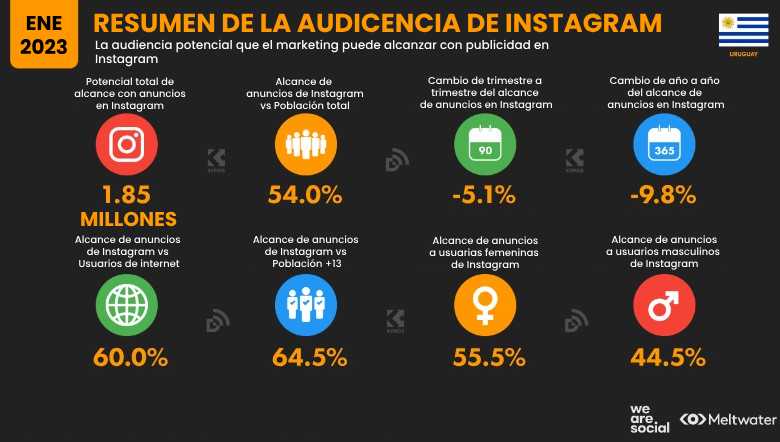
As a leading digital marketing agency in Latin America, we work with various companies in the planning and development of their digital strategies in the region. Whether they are B2B, B2C, small or large companies, we know how to use internet resources to boost their businesses.

Read more Digital Marketing News.

Social Media Statistics Uruguay 2023

Estadísticas de redes sociales en Uruguay 2023

We Are Social y Meltwater presentaron la actualización del Digital 2023 Global Overview Report. Hablaremos de los datos registrados sobre la situación digital en Uruguay en el 2022-2023.

Uso de móviles, Internet y redes sociales

Estadísticas de redes sociales en Uruguay 2023

La población uruguaya está conformada por 3.42 millones de personas, de las cuales el 95.7% viven en zonas urbanizadas.

El número de dispositivos móviles conectados en el país es de 5.86 millones, lo que supone que hay más de un aparato celular por persona en promedio.

Los usuarios de Internet activos en el país representan el 90.1% de la población total. De ese 90.1%, 81.8% es activo en diversas redes sociales, entre ellas: Facebook, Tik Tok, Instagram, YouTube.

Crecimiento digital: enero 2022 vs enero 2023

Estadísticas de redes sociales en Uruguay 2023

Con respecto al 2022, la población en Uruguay aumentó en un 0.01%.

Desde el año pasado las conexiones telefónicas móviles aumentaron, específicamente en un 2.1%.

El porcentaje de usuarios de Internet aumentó en un 0.01%, a lo largo de un año.

El número de usuarios conectados a redes sociales no se ha registrado aún.

Resumen general del uso de Internet en Uruguay

Estadísticas de redes sociales en Uruguay 2023

¿Cuánto tiempo crees que pasas frente a la pantalla de tu teléfono?

El uso de los dispositivos móviles se ha vuelto esencial.

3.08 millones de usuarios son los que acceden a Internet desde cualquier dispositivo, registrando un aumento del del 0.01% anual.

De la totalidad de estos usuarios, el 98.2% acceden a internet través de dispositivos móviles.

Uso de redes sociales

Estadísticas de redes sociales en Uruguay 2023

2.80 millones de personas usan redes sociales activamente en Uruguay, es decir, el 81.8% de la población total.

El 53.6% de usuarios de redes sociales son mujeres, mientras que el 46.4% son hombres.

Estadísticas de la audiencia de Facebook

Estadísticas de redes sociales en Uruguay 2023

¿Sabías que por medio de los anuncios publicitarios dentro de Facebook, se alcanzan potencialmente a 2 millones de personas en Uruguay? Esto presenta el 69.7% de la población activa en redes sociales mayor de 13 años. Una gran forma de comenzar a implementarlos es mediante una agencia de marketing digital argentina.

Dicho público alcanzado, se conforma por un 55% de mujeres y 45% de hombres.

Estadísticas de la audiencia de Instagram

Estadísticas de redes sociales en Uruguay 2023

A través de los anuncios publicitarios en de Instagram, se alcanzan potencialmente a 1.85 millones de uruguayos.

Esto representa el 64.5% de la población activa en redes sociales mayor de 13 años.

El público alcanzado está conformado por un 55.5% de mujeres y 44.5% de hombres.

A pesar de que Instagram es una red social muy popular, apenas un 54% de los uruguayos la usan.

Estadísticas de la audiencia de Twitter

Estadísticas de redes sociales en Uruguay 2023

Los anuncios publicitarios de Twitter alcanzan potencialmente a 703 mil de personas.
El 24.5% son mayor de 13 años, de los cuales hay un aumento del 3.3% en el cambio trimestral.
El público se divide en un 44.8% mujeres y 55.2%  hombres.

Estadísticas de la audiencia de LinkedIn

1.20 millones de personas son alcanzadas a través de sus anuncios publicitarios en LinkedIn.

Esto presenta el 45.6% de la población activa en redes sociales mayor de 18 años.

Se presentó un aumento trimestral del 9.1%.

En la segmentación de usuarios por género, LinkedIn se conforma por el 50.9% de mujeres, y el 49.1% de hombres.

ver más noticias de marketing digital

e-commerce in Argentina, 2020 brief

e-commerce in argentina

Year 2020 has undoubtedly been an atypical year for everyone and e-commerce in Argentina could not stay on the sidelines. Beyond the difficult economic situation the country is going through, this last year of the Pandemic has resulted in significant growth for online sales.
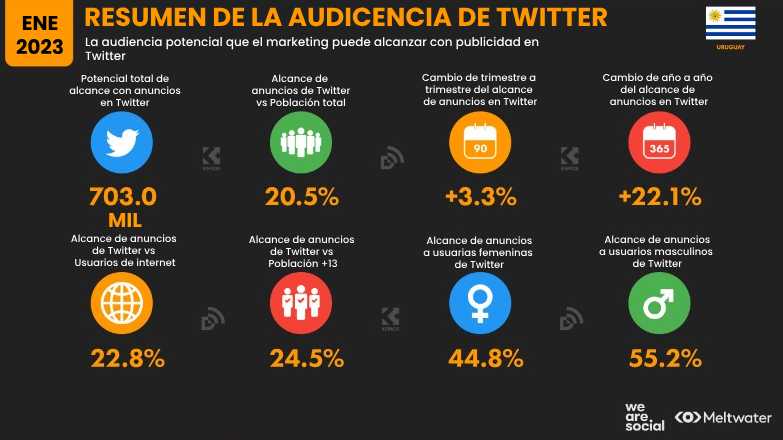
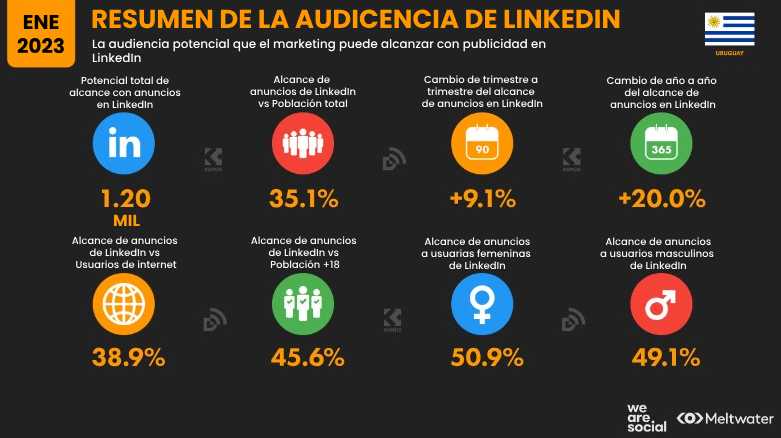
The year 2020 has been an unprecedented year for Argentines, as well as for the rest of the world. Our lives have changed and our shopping behaviors have changed too. And in a few months, a greater evolution has been achieved than in recent years when talking about companies digital transformation and e-commerce. From our Way2net digital marketing agency we can attest to this, since all our clients, regardless of the industry, have experienced great growth in their online sales.

ecommerce in Argentina

Let’s review some indicators that show this:

+58% of people do banking operations online or through the app (48% in 2019)

+48% watch on demand movies (40% in 2019)

+43% order food online (27% in 2019)

+34% buy food and beverages online (18% in 2019)

+1.28 million of online shoppers, for a total of 20.05 million (18.77 million in 2019)

facturacion 2020 e-commerce en argentina
Fuente CACE

+124% growth in revenue ($ 905 million vs. $ 403 million in 2019)

6 out of 10 buy a product at least once a month. And half of post-pandemic online shoppers are already everyday or regular e-commerce users.

crecimiento e-commerce en Argentina
Fuente CACE

The key factors to buy online: Home delivery, the ease of finding products quickly and the safety of the operation were more powerful than in 2019.

However, not all that glitters is gold, and we can also mention the cons.

Main obstacles for e-commerce development of e-commerce in Argentina

Shipping costs are the main barrier. Although many new players have appeared competing for services and rates, the cost of shipping in Argentina is still high.

Logistics and delivery delays are another factor mentioned.

Another important obstacle for consumers is not being able to see and touch the merchandise. Especially in some areas such as clothing, shoes and others, and especially when the customer does not know the brand that they are buying.

e-commerce en argentina problemas
Fuente CACE

On the business side, we can also mention that as there was greater competition and concentration of online sales, the costs associated with online advertising have also increased.

For some companies, it has also been a problem not to be prepared to face the online world, with a digital strategy already planned and underway.

How is the profile of the online consumer in Argentina?

In 2020 we find a more diversified buyer profile, with post-pandemic buyers entering the ecommerce world buying mobile, while more experienced buyers continue to use more desktop computers.

Another aspect that stands out is the change in the socio-economic profile of online shoppers. We went from the historic high and medium level to a more socio-economic profile in the medium and low segment. It is not that the high segment disappeared, but based on their experience they have expanded the categories that used to bought online, while the lower middle segment is more about a new consumer, who was not used to buying online.

No major changes were observed with respect to the chosen payment method, and credit card is still the main method used.

principales medios de pago ecommerce en argentina

On the other hand, a great change was noticed in the chosen shipping method, as a result of the pandemic, where home delivery was positioned in the first place, displacing the picking in store that had been leading in previous years.

Main industries e-commerce in Argentina 2020

Sportswear, clothing and food and beverages are the TOP3 of the most popular categories among Argentines for this 2020. Food and beverages climbed 7 positions in the year of the pandemic. Then followed closely by Technology and Electro.

principales rubros de e-commerce en Argentina 2020
Fuente CACE

For the first time in many years, COVID-19 has eliminated tourism and entertainment from the ranking of first time purchased categories, giving the place to categories related to food, home conditioning, personal care, courses, careers, seminars, among others.

We will see what awaits us in 2021, but everything suggests that we will have another year where e-commerce development will once again be one of the stars in this adverse economic context

Data Source CACE

Way2net awarded as Top Digital Marketing Agency in Argentina

Way2net awarded as Top Digital Marketing Agency in Argentina

Way2net is a digital marketing agency, specialized in e-strategy planning and business development, digital marketing, online advertising, web optimization, social media, web design, and development. We are a Google Partner Agency certified by Google Inc. and we offer a wide variety of services including digital strategy, social media marketing, and advertising.

Clutch recently announced the top digital marketing agencies in Argentina. We are excited to announce that Way2net has made the list on their directory.

Way2net awarded as Top Digital Marketing Agency in Argentina

Clutch is a B2B market research firm located in Washington DC that connects service providers and buyers through data and verified research. Central to their process is client reviews. In this unique process, analysts have spoken directly with many of our clients and learned more about the services we provided, as well as technological capabilities, results, and business acumen.

Our clients’ participation made this award possible, and we want to thank them for their time and honest feedback. Below is are excerpts from recent reviews, along with project summaries:

“We continue working with them because of their thoughtful service.” –Marketing Coordinator, Synthon Bagó

Our team was hired to develop a pharmaceutical company’s marketing strategies. We work with different social media channels, crafting campaigns. We also worked on their site.

“With Way2net Digital Marketing Agency, we found a mix of business expertise and digital experience.” –Founder, Delbazar

We provided a variety of digital services for an online store. Our team developed an e-commerce website and social media campaigns

Digital marketing has forever changed how companies attract customers and generate revenue. If you’re considering hiring an online marketing company to help you boost your brand image, position your company in search rankings, or manage your social media presence, The Manifest can help find a business to best suit your needs. The Manifest, an affiliate site of Clutch, lists top digital marketing companies in Argentina. Among top companies, the site also lists descriptions, projects, and awards for users to utilize.

Need advice in marketing and communication? We are experts in digital strategy. Contact us by phone or fill out the form on our website and a team member will be in touch shortly. We look forward to hearing from you and your team.

Social Media Image Sizes: Complete Guide for 2026

tamaño de imagenes de redes sociales

Images and videos are playing an increasingly important role in social media content. Therefore, it is essential to understand the recommended image sizes for each social media platform, since visual content is often the first interaction users have with a brand.

One important factor to keep in mind is that image dimensions can vary depending on whether the content is viewed on mobile devices or desktop computers.

Social Media Image Sizes in 2026: Updated Guide by Platform

Publishing images in the correct size is not just an aesthetic consideration. It can directly affect organic reach, engagement rates, and advertising performance.

Each platform compresses, crops, and displays images differently. Therefore, using the recommended dimensions helps prevent quality loss, unexpected cropping, and reduced visibility in users’ feeds.

In this updated 2026 guide, you’ll find the recommended image sizes for Instagram, Facebook, LinkedIn, X (Twitter), YouTube, TikTok, and Pinterest, along with key technical recommendations to improve your results.

What Should You Consider Before Choosing an Image Size?

Beyond the number of pixels, it is important to consider:

  • Aspect ratio
  • Safe area, especially for advertising content
  • Minimum recommended resolution, with 1080 px wide as a general standard
  • File size and automatic compression applied by each platform

The most important aspect ratios in 2026 are:

  • 1:1 — Square
  • 4:5 — Vertical, optimized for feed content
  • 9:16 — Stories, Reels, and vertical video
  • 16:9 — Horizontal video and YouTube

Facebook Image Sizes

Social Media Image Sizes for facebook

Facebook remains one of the most widely used social media platforms for both businesses and individuals. Choosing the correct dimensions helps ensure that your visual content is displayed properly across devices.

  • Profile photo: 320 × 320 pixels. This size applies to both personal profiles and business pages.
  • Facebook cover image: 851 × 315 pixels for desktop and 560 × 315 pixels for mobile.
  • Facebook cover video: 820 × 312 pixels. Recommended format: MP4. Video duration should be between 20 and 90 seconds.
  • Square posts: 1200 × 1200 pixels.
  • Landscape posts: 1200 × 900 pixels.
  • Link post images: 1200 × 628 pixels.
  • Facebook ads: 1600 × 628 pixels.

When designing Facebook cover images, keep in mind that content placed near the sides may be cropped on mobile devices. Important text and visual elements should therefore be positioned within the safe area.

facebook coverage Social Media Image Sizes

Facebook Ad Image Sizes

For Facebook advertising, it is recommended to use the same dimensions as square posts —1200 × 1200 pixels— or at least 1080 × 1080 pixels.

The platform will automatically resize the creative depending on the placement.

Examples include:

Right-column ad: 254 × 133 pixels.erales es recortada como se ve en la siguiente imagen

Desktop ad image: 470 × 246 pixels.

Mobile ad image: 560 × 292 pixels.

Instagram Image Sizes

Social Media Image Sizes for instagram

Instagram is one of the most visual social media platforms, making image quality and format particularly important for brands.

  • Profile image: 320 × 320 pixels. Minimum resolution: 180 × 180 pixels.
  • Square post: 1080 × 1080 pixels.
  • Landscape image: 1080 × 566 pixels.
  • Portrait image: 1080 × 1350 pixels.
  • Instagram Stories: 1080 × 1920 pixels.

Video Sizes for Instagram

Whether you’re publishing videos in the feed or sharing them through Stories, using the correct dimensions helps ensure that the content is displayed properly.

  • Feed videos: 640 × 640 pixels, with a duration of between 3 and 60 seconds.
  • Instagram Stories videos: 750 × 1334 pixels, with a maximum duration of 10 seconds.

Instagram Ad Image Sizes

Instagram ad dimensions vary depending on the ad format and placement.

The main formats include:

  • Square ads: 1080 × 1080 pixels.
  • Landscape ads: 1080 × 566 pixels.
  • Story ads: 1080 × 1920 pixels, with a 9:16 aspect ratio. The minimum recommended size is 600 × 1067 pixels, with a maximum file size of 30 MB.

For the latest specifications, always check Instagram and Meta’s official advertising guidelines before launching a campaign.

IGTV Sizes

Videos can be published in both vertical and horizontal formats.

  • Vertical: maximum 9:16 and minimum 4:5.
  • Horizontal: maximum 16:9 and minimum 5:4.
  • Cover image: 1:1.55 ratio or approximately 420 × 654 pixels.

LinkedIn Image Sizes

Linkedin Social Media Image Sizes

LinkedIn is particularly relevant for professional networking and B2B communication. Visual content can play an important role in increasing engagement and strengthening a company’s professional presence.

Recommended dimensions include:

  • Personal profile photo: 400 × 400 pixels.
  • Personal profile cover image: 1584 × 396 pixels. Maximum file size: 4 MB.
  • Company cover image: 1584 × 396 pixels.
  • Company logo: 300 × 300 pixels.
  • Post image: 520 × 320 pixels.
  • Post with a link: 520 × 272 pixels.
  • Square post: 1080 × 1080 pixels.

LinkedIn Ads

LinkedIn also has specific recommended dimensions for different advertising formats.

Some of the main formats include:

  • General ads: 50 × 50 pixels.
  • Rectangle ads: 300 × 250 pixels.
  • Wide skyscraper: 160 × 600 pixels.
  • Leaderboard: 728 × 90 pixels.

LinkedIn Video Ads

Recommended specifications include:

  • File size: between 75 KB and 200 MB.
  • Format: MP4.

Available video dimensions include:

Horizontal:

  • 480 × 360 pixels
  • 640 × 360 pixels
  • 640 × 480 pixels
  • 960 × 720 pixels
  • 1280 × 720 pixels
  • 1440 × 1080 pixels
  • 1920 × 1080 pixels

Square:

  • Minimum: 600 × 600 pixels.
  • Maximum: 1080 × 1080 pixels.

Vertical:

  • Minimum: 500 × 625 pixels.
  • Maximum: 1080 × 1920 pixels.

X (Twitter) Image Sizes

Image Sizes for twitter

These are the recommended image dimensions for X, formerly known as Twitter:

  • Profile photo: 400 × 400 pixels.
  • Header image: 1500 × 500 pixels.
  • Post image: 1024 × 512 pixels.
  • Twitter/X Cards: 800 × 320 pixels.
  • Summary Card with image: 280 × 150 pixels.
  • In-stream image: minimum 440 × 220 pixels.

JPG, PNG, and GIF formats are supported for many types of visual content.

Pinterest Image Sizes in 2026

Image Sizes for pinterest

Pinterest is a highly visual platform where vertical images generally perform particularly well.

  • Profile image: 165 × 165 pixels.
  • Standard Pin: 1000 x 1500 px, with a 2:3 aspect ratio.
  • Board cover image: approximately 200 × 200 pixels.
  • Board cover thumbnail: 100 × 100 pixels.

Idea Pin / formato vertical

  • 1080 x 1920 px

Pinterest Ad Sizes

Promoted Pins should generally use:

  • 600 × 900 pixels
  • Recommended aspect ratio: between 2:3 and 1:3.5.

YouTube Image Sizes

Image Sizes for youtube

YouTube requires different image dimensions depending on the type of visual asset:

  • Profile image: 800 × 800 pixels.
  • Channel cover image: 2560 × 1440 pixels. Maximum file size: 6 MB.
  • YouTube thumbnail: 1280 × 720 pixels.

Thumbnails are particularly important because they can directly influence click-through rates and video views.

TikTok Image Sizes in 2026

TikTok is primarily designed around vertical content.

Profile Photo

  • 200 × 200 pixels

Vertical Videos and Images

  • 1080 × 1920 pixels
  • 9:16 aspect ratio

This format is ideal for TikTok videos and other full-screen vertical content.

Why Is It Important to Use the Correct Image Size?

Using the correct dimensions is not simply a matter of making your social media profiles look professional.

It can also contribute to better digital marketing performance by:

  • Improving CTR (click-through rate)
  • Increasing engagement
  • Reducing automatic cropping
  • Optimizing advertising campaigns
  • Strengthening the professional perception of your brand

Poor image resolution can even affect the performance of paid campaigns on platforms such as Meta Ads, LinkedIn Ads, and TikTok Ads.

For this reason, visual content should be considered an important part of your overall social media and digital marketing strategy.

Social Media Image Size Summary Table 2026

PlatformProfileFeed PostStories / ReelsCover
Instagram320 × 3201080 × 1080 / 1080 × 13501080 × 1920
Facebook320 × 3201200 × 1200 / 1200 × 6301080 × 1920820 × 312
LinkedIn400 × 4001200 × 6271584 × 396
X400 × 4001200 × 6751500 × 500
YouTube800 × 8001280 × 720 (thumbnail)2560 × 1440
TikTok200 × 2001080 × 19201080 × 1920
Pinterest165 × 1651000 × 15001080 × 1920

Final Recommendation

Social media image specifications are constantly evolving. Platforms update their formats, placements, and technical requirements regularly, so it is a good practice to review the recommended dimensions before creating a new campaign or content plan.

However, dimensions alone do not guarantee better results.

The quality of the creative, the message, the audience, the platform, and the overall digital marketing strategy are equally important. The right format simply ensures that your content has the best possible technical foundation.

If your company needs help developing a social media strategy, creating content, or managing digital campaigns, a specialized digital marketing agency can help you define the right formats and content strategy for each platform.

The main benefits of WooCommerce for startups

benefits of WooCommerce

benefits of WooCommerceWooCommerce is a WordPress plugin that is ideal for ecommerce retailers just starting out. It is simple enough to learn, pretty powerful, and you cannot beat the price – it is free.

Let’s check main benefits of WooCommerce:

It is free to download: There are many different CMS systems available and they are great. The drawback with a lot of these, however, is the price.

It is easy to use and flexible: You can easily add categories, change prices, etc, even if you have very little technical know-how. It is WordPress based so if you are familiar with WordPress, you will adapt quickly. You can also link into virtual products.

Build a professional looking store: You can use WooCommerce to build an ecommerce platform that looks professionally designed on your own site.

You can customize it a lot: There are a lot of different customization options that you can use to help your site stand out. Strangely, for a free plugin, you have a wide range of themes to choose from. Choose any of the 39 themes from WooThemes to get started. Unlike some other themes, you are able to change preset colors, CSS styles, and coding.

A full platform: It is a completely functional, professional ecommerce platform. It’s safe to say that besides some good WordPress hosting (and WordPress itself, of course), WooCommerce is all you really need to start making money off your website right away.

You are able to access various analytics and make use of tracking, tools to boost customer engagement, apply the discounts you like, and keep your clients up to date when it comes to the status of their orders. It allows you all the functions of many of the expensive paid options and quite a few more.

Analytics built-in: You can choose to make use of the analytics built into the system to track sales, average order totals, client statistics, etc. from the admin panel. The information is presented in an easy to understand style.

Many apps and extensions: There are a whole host of apps and extensions that can be used to increase the functionality of your WooCommerce site. Some of these can be downloaded free of charge, like Google Analytics, others you have to pay for. With the add of the apps, you can get all the information and functionality you might possibly want without having to click out of your admin page.

WooCommerce is a plugin that will prove worth its weight in gold. It is ideal for a startup because it offers such a wide range of features and a lot of support. It is also a well-known plugin between leading digital marketing agencies.

Sources:

https://websitebuilder.org/Facts-You-Need-to-Know-About-WooCommerce

Way2net recognized as a Leading Digital Marketing Agency on Clutch.co!

Agencia de Marketing Digital líder

Way2net works Way2hard to become a Leading Digital Marketing Agency and to make sure your business has the resources it needs to distinguish itself and to be successful in the ever growing online market. With our expertise in Business Development, Web Design, Online Marketing, Internet Advertising, and Digital Strategy, we know how to help you get where you want to go.

To give our word more significance, we are very happy to report that we have recently been recognized by Clutch’s as one of their Top Digital Marketing Agencies in Argentina! Our excellent team of marketers continuously produces results so remarkable that Clutch even ranked us as one of the top recommended Digital Marketing Agencies in Latin America on Clutch’s leaders matrix as well!

Leading Digital Marketing Agency

Clutch is a B2B ratings and reviews platform based in Washington, DC that is dedicated to giving businesses a simpler and more efficient medium of searching for the most suitable agencies with whom they can form partnerships for projects. The research firm maintains a growing list of company profiles, enhanced with verified reviews by the past clients of those companies. Their goal is to provide the most accurate information available on each agency to businesses in search of partners with the most appropriate qualifications that will help them arrive at the desired outcomes for their projects.

Here’s what some of our esteemed clients had to say about our collaborations:

Leading Digital Marketing Agency

“Their knowledge of digital platforms and ability to understand a very specific industry like ours is outstanding.” – CEO, Grupo MCI

“They’re a true partner that knows our business.” “Their work has helped grow the number of clients substantially”- Director of Client Solutions, Go Global 

It was stellar reviews like this that got us the accolades we’ve received. Check out Way2Net’s profile to read more great client reviews!

Comments about Instagram logo redesign erupt in social networks

instagram logotipo redesenho

instagram logo redesignWe were already hearing rumors that Instagram was working on the redesign of a new design for Android, but we did not expect the renovation was going to be so radical. The popular photographs App with over 400 million users, announced a new design for both the application icon, and everything inside it. The new Instagram logo redesign corresponds to the third time that the App changes it appearance. The first two designs were made by Kevin Systrom (Instagram co-founder) and the last one by Ian Spalter (chief designer).

The redesign also extends towards the three applications owned by the social network: Boomerang (facilitates recording short videos), Layout (used to create photo collages) and Hyperlapse (creates fast motion videos).

As reported by the social network in its announcement, the new design improves how the App looks and feels, but without changing the navigation style that characterizes it. In addition, the App aims to put more focus on photos and videos.

Ian Spalter said that this redesign is a reflection of the different ways in which users of Instagram, Layoutt, Boomerang and Hyperlapse use the services. “We ask employees to describe  Instagram logo of in less than 5 seconds. Almost all obviated the rainbow, lens and viewfinder”, said design specialist.

What is curious is that in the middle of the vintage revolution that society lives, Instagram has decided to eliminate the retro air that characterizes the App since its launch in 2009.

Several social networks impact

Instagram users level of satisfaction has always been high, since the platform is dynamic and filters have been improving. What happened, then, that the App become object of criticism?

Social networks are sensitive, perhaps this is the reason why Instagram users does not applaud the new logo. Instead of this they express their rejection in other social networks like Twitter and Facebook.

Users in social networks, especially on Twitter, were quick to express their opinion:

rediseño logo Instagram
rediseño en el logo de Instagram


What do you think about Instagram logo redesign?
Consult us about our Monthly Plan on Social Networks!